
 EN
EN
How 3D Speakers Redefine Luxury Audio in Mercedes-Benz Interiors
The Science of Spatial Sound: Why 3D Speaker Placement Elevates Immersion
Car audio systems have always had trouble getting sound to feel right because of how cars are built and where speakers get placed. Regular systems just stick speakers in doors, but 3D speaker tech spreads out the drivers all over the inside space. We're talking about spots above our heads near the ceiling and even back there on those storage shelves behind seats. When these speakers work together in different directions front to back, left to right, and up and down, they create something pretty amazing for listeners. The whole cabin fills with sound that wraps around people instead of coming from one spot, making music feel more immersive than ever before.
By combining psychoacoustic principles with advanced digital signal processing, these systems simulate directional cues that the human ear interprets as height and depth. The result is a spherical audio experience that immerses every occupant, featuring:
- Precision imaging: Instruments remain distinctly positioned even in complex musical passages
- Reduced sweet-spot dependency: Consistent sound quality across all seating positions
- Frequency-specific channeling: High frequencies are directed away from reflective surfaces to preserve clarity
This spatial accuracy transforms listening into a dimensional event—vocals appear centered in front, while ambient effects float overhead—marking a significant leap beyond traditional stereo separation.
Burmester 3D Surround Sound: Precision Engineering for Authentic Acoustics
Mercedes-Benz collaborated with Burmester, a leader in high-end audio, to develop a system engineered specifically for automotive acoustic challenges. The Burmester 3D Surround Sound system includes 24 strategically placed drivers, featuring near-ear tweeters and ceiling-mounted speakers, all connected via a fiber-optic MOST network for lossless signal transmission.
Each component undergoes rigorous metallurgical analysis to minimize resonance, while neodymium magnets ensure transient response accuracy within 0.01ms. The system’s dual-path calibration enhances realism:
- Adaptive equalization uses microphonic feedback to adjust for road noise at varying speeds
- Seat-position detection tailors sound wavefronts to occupant locations through Seating-Aware Processing (SAP)
Tests show this system has about 40% more spacious sound than most high-end car audio setups on the market today. What really stands out is how evenly it handles different volumes throughout all frequencies, staying consistent within just half a decibel difference. That means no weird dips or peaks when listening to something as subtle as a string ensemble or as intense as a full orchestra building up to a climax. The combination of solid components and smart software creates an experience that feels real in the cabin. It doesn't try to trick ears with overdone effects either. Instead, what makes it so engaging is simply getting things right musically speaking.
From 3D to 4D: Evolution and Real-World Impact of Mercedes-Benz Premium Audio Systems
Beyond Stereo: How Burmester 4D Adds Tactile Dimension with Seat Exciters
Burmester's 4D tech takes regular 3D spatial audio to another level by adding actual physical sensations. They've put special vibration devices called exciters right in those front seats. What happens next? Well, these little gadgets take the really low sounds from music and turn them into gentle shakes that match what people are hearing. So instead of just listening to powerful bass notes, riders actually get to feel those same rhythms vibrating throughout their entire body while sitting there. It creates this whole new kind of immersive experience for anyone inside the car.
The system changes how strong the vibrations feel depending on things like how loud it is playing, what kind of music we're hearing, and how long someone has been listening, which makes driving for hours much more comfortable. When Burmester 4D gets going, it actually works with our sense of touch in the body, cutting down ear tiredness somewhere around 30% when people listen for a while. That means folks can really get into their favorite tunes without their ears getting worn out. What's interesting about these vibrations is they aren't just extra stuff thrown in there. They work alongside the actual sound coming from the music itself. The engineers designed them to make everything better sounding rather than making things too intense or overwhelming.
This fusion of sound and sensation redefines in-car audio, transforming passive listening into an embodied journey that leverages both auditory and physical perception for unparalleled immersion.
OEM Integration and Model-Specific 3D Speaker Compatibility Across Mercedes Platforms
W205, W206, W222: Which Models Support Factory-Installed 3D Speaker Systems?
Mercedes-Benz installs their 3D speaker systems right from the factory, making them part of the car's overall sound and electrical setup which helps keep everything working smoothly over time. For owners of the older W205 C-Class models made between 2014 and 2021, there was an option to get a pretty impressive 13-speaker Burmester system that could do some cool 3D surround effects when activated. The newer W206 C-Class coming out since 2021 takes things even further with better signal processing technology that creates a much more enveloping listening experience inside the cabin. Drivers who care about music quality will notice these improvements immediately during their daily commute or long road trips.
The W222 S-Class (2013–2020) represents the peak of integration, featuring a 24-speaker Burmester 3D system with custom-tuned crossovers and resonance chambers built into door panels and headliners. OEM installation ensures compatibility, preserves warranty coverage, and eliminates the compromises of aftermarket upgrades.
To confirm factory audio specifications, check vehicle documentation for package codes such as “Burmester High-End 3D Surround Sound.”
3D Speakers as Design-Centric Luxury Elements in Mercedes Interiors
Seamless Aesthetics: Hidden Grilles, Illuminated Tweeters, and Minimalist Integration
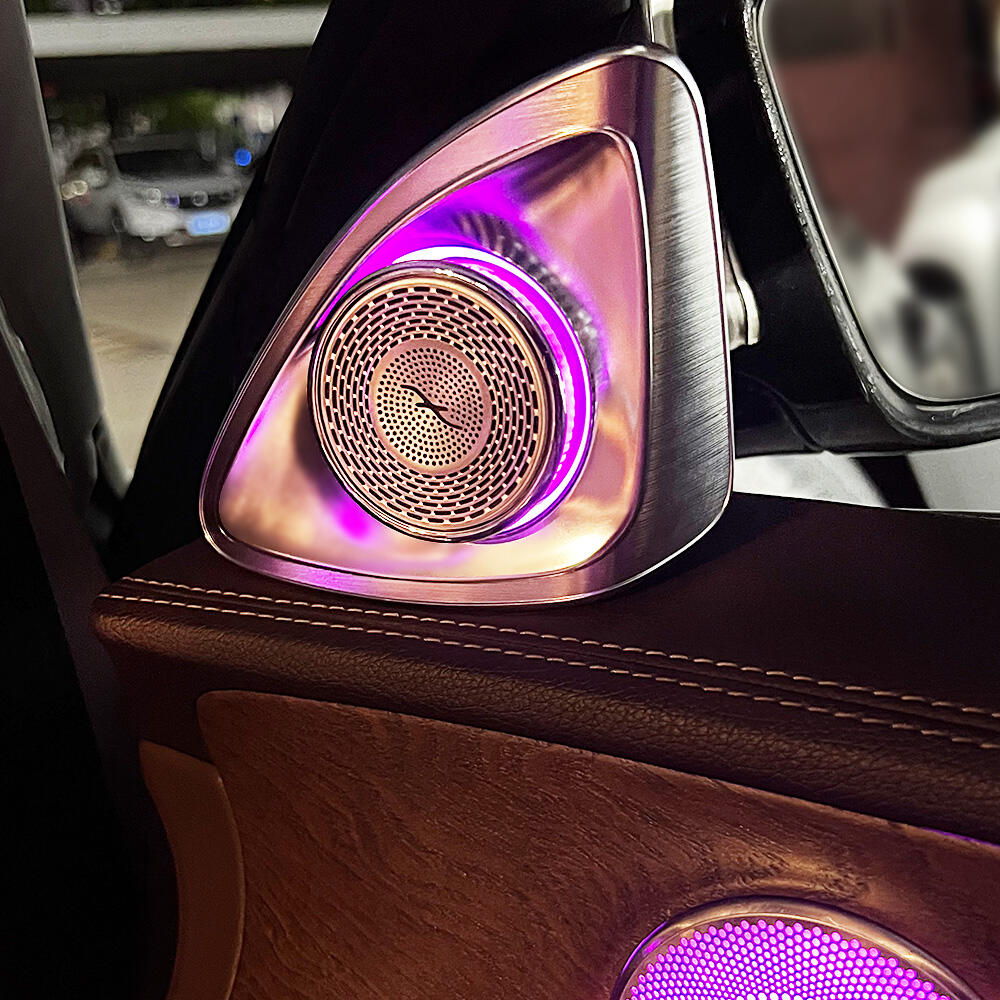
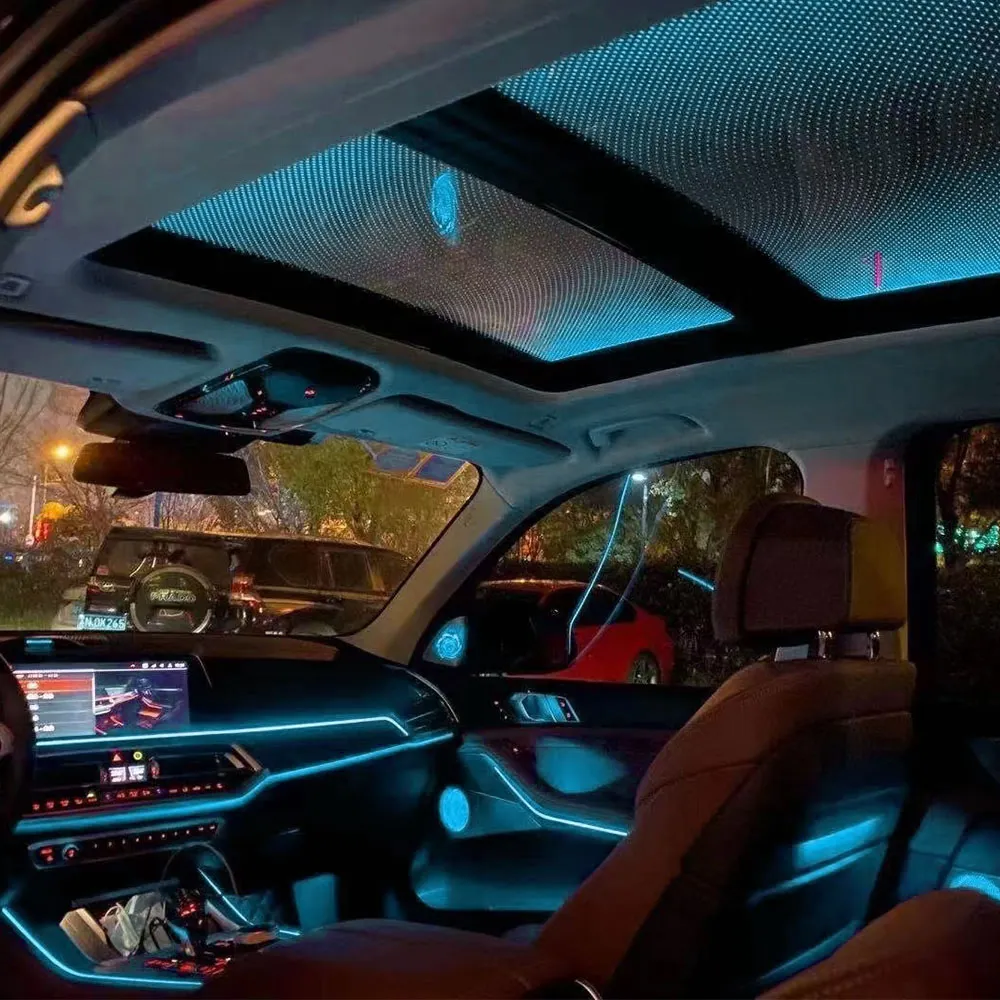
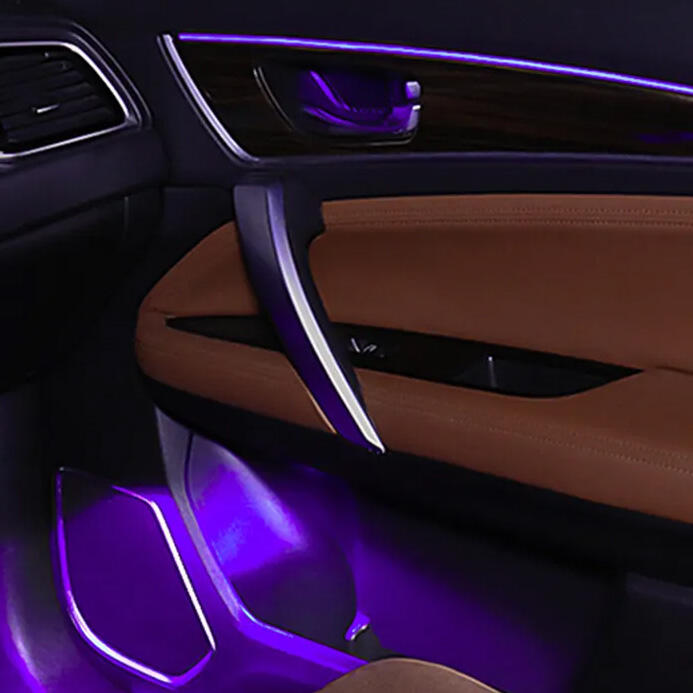
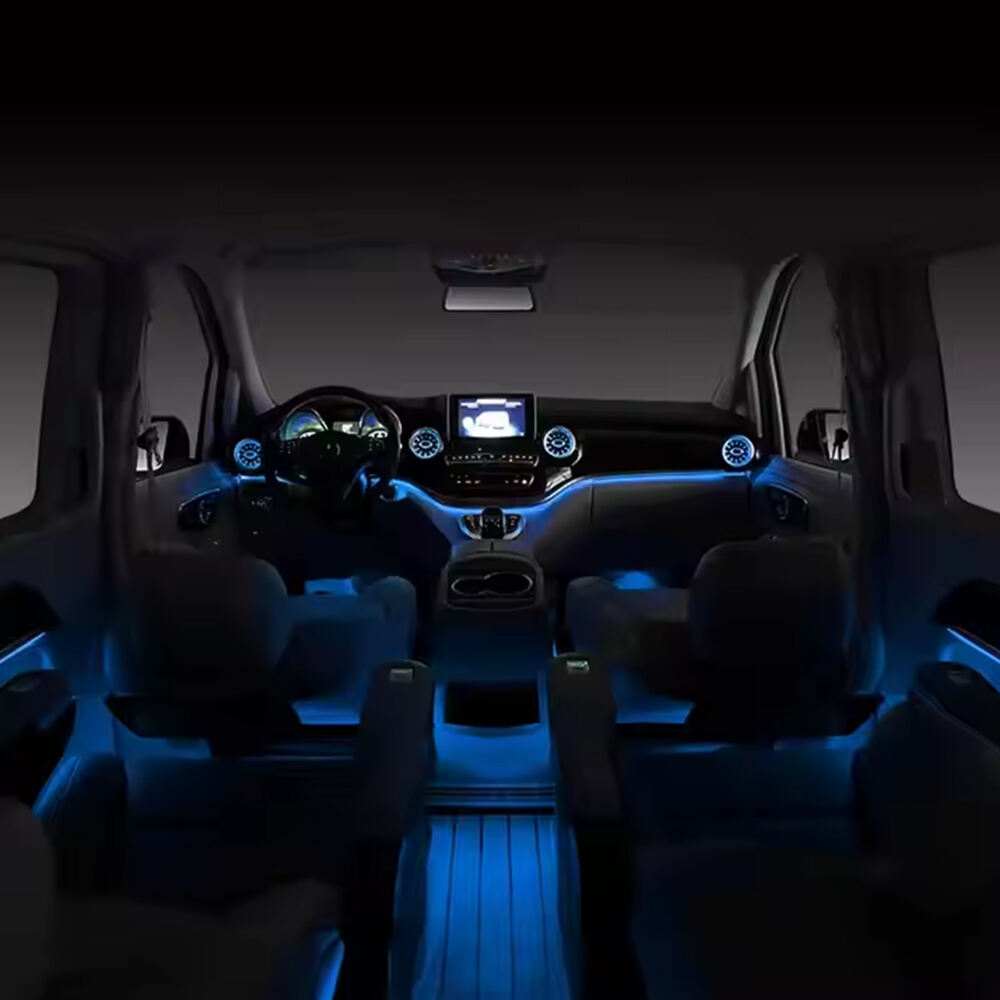
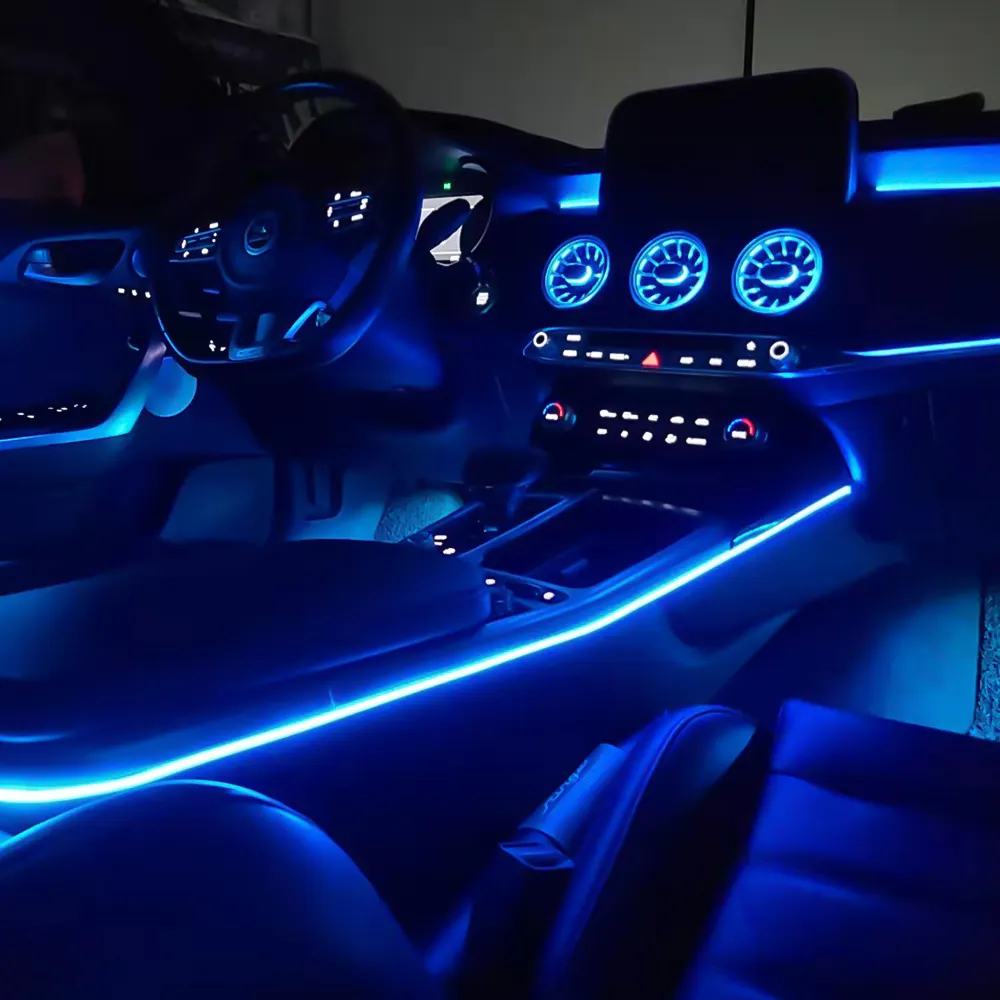
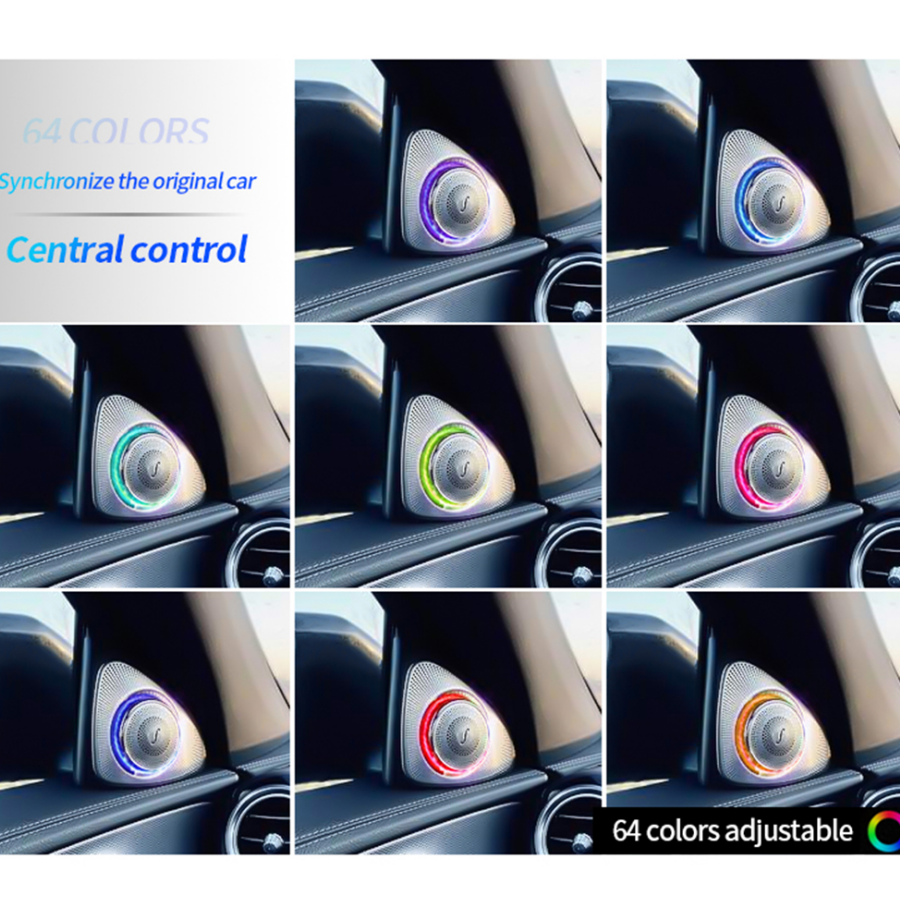
The latest Mercedes-Benz cars take audio integration to another level with their 3D speaker systems built right into the interior design. These acoustic grilles hide perfectly inside the dashboard and door panels so sound flows freely around the cabin while keeping everything looking sleek and uninterrupted. What really stands out though are those glowing tweeters that come in no fewer than 64 different colors. They don't just handle high frequencies but also act as part of the car's ambient lighting setup, changing hues to match whatever mood the driver wants to set inside the vehicle.
The components take a minimalist approach, basically disappearing when they're not being used. What this means for design? A real focus on visual balance. The speakers themselves blend right in with high quality stuff like open pore wood finishes, those sleek aluminum accents, and soft Nappa leather surfaces. We're talking about creating spaces where top notch sound quality lives alongside clean lines and simple shapes. These speakers might seem almost invisible at first glance, but once turned on they deliver incredible audio experiences. It all fits perfectly with what Mercedes-Benz stands for: making technology work quietly behind the scenes while still delivering exceptional performance without showing off.