
 EN
EN
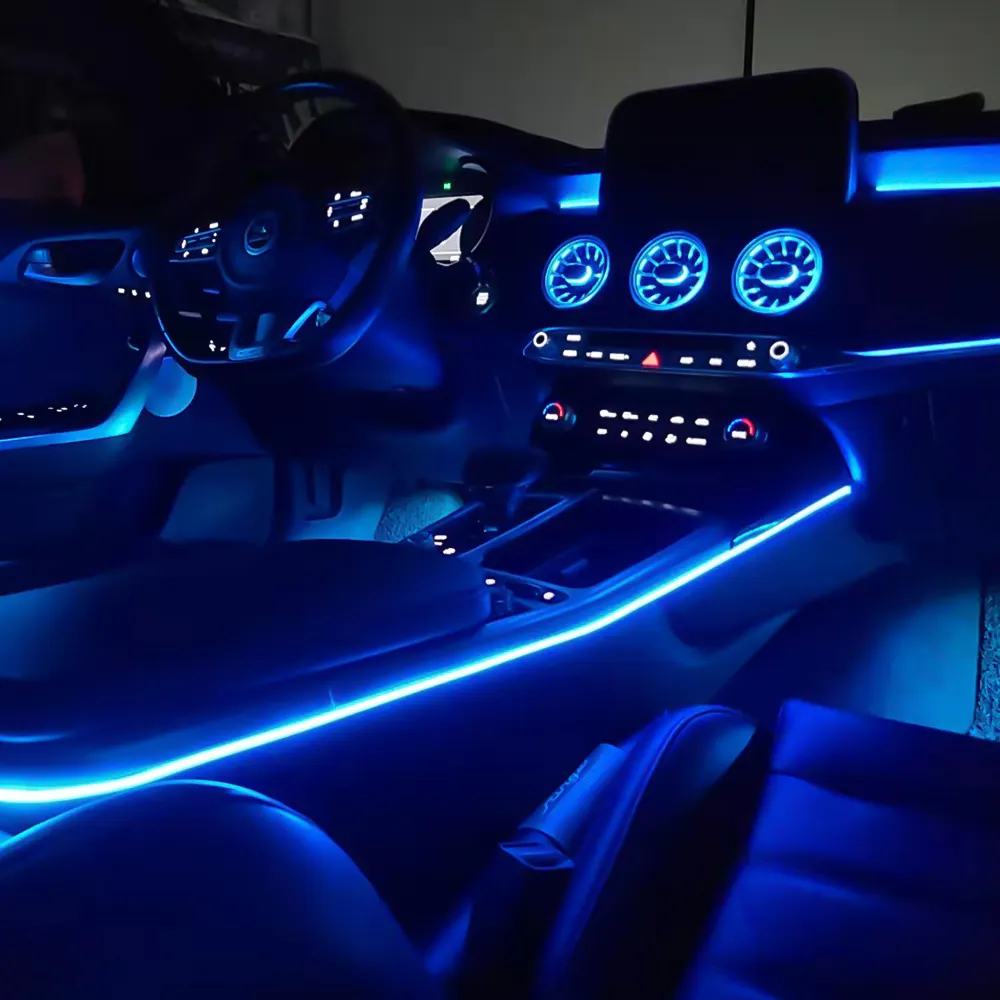
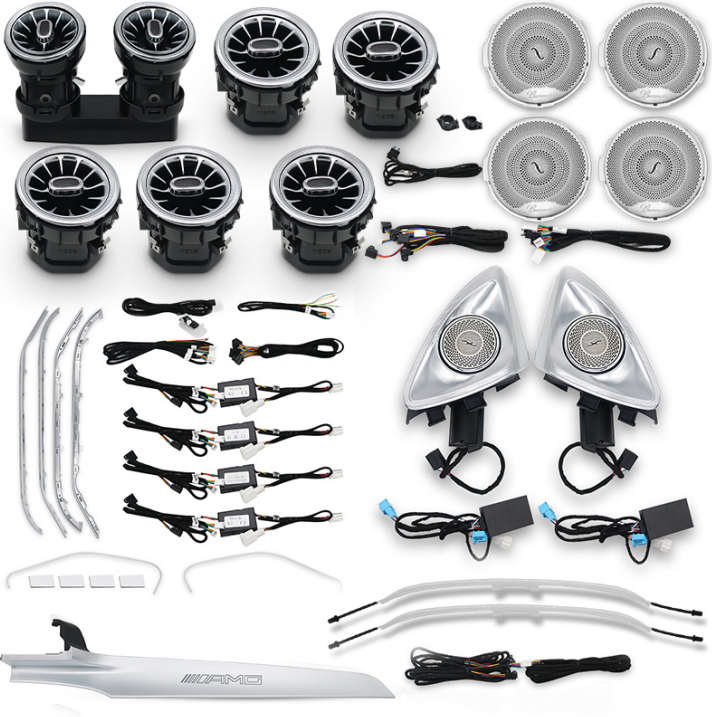
W205 Ambient Light System Architecture and Batch Installation Feasibility
Electrical & CAN Bus Constraints Across W205 Model Years (2015–2021)
The ambient lighting system in the W205 is built around different Controller Area Network (CAN) architectures depending on when the car was made. Before the facelift period from 2015 to 2017, these cars used CAN-C technology which had pretty limited bandwidth. This meant the ambient lights could only be turned on or off through commands from the Body Control Module. Starting in 2018, Mercedes upgraded to FlexRay for much better color control options. But this change came with requirements for stricter voltage control within ±0.5 volts and stronger message handling capabilities. Looking at diagnostic data shows something interesting too: older models before the facelift tend to have about 30% more errors on their CAN bus when integrating third party components. Most of these problems stem from timing issues between messages and weaker resistance to electrical interference.
Why Batch Installation Is Technically Possible—but Not Uniformly Reliable
Standardized wiring harnesses support mass deployment in theory, but real-world reliability is model-year dependent. Three interrelated constraints drive inconsistency:
- CAN bus message arbitration conflicts when introducing external control modules
- Voltage spikes exceeding 12.6V during LED activation in pre-facelift BCMs
- Firmware dependencies tied to head unit versions (e.g., NTG5.1 vs. NTG5.2), where mismatched software blocks feature enablement
These variables produce divergent success rates: technicians achieve 92% first-time functionality in 2020–2021 models, but only 74% in 2015–2017 vehicles. While batch installation remains technically feasible across all W205 years, uniform reliability is unattainable without year-specific hardware, calibration, and coding protocols.
W205 Ambient Light Compatibility: Facelift vs. Pre-Facelift Requirements
OEM Module Recognition Differences (2015–2017 vs. 2018–2021)
The way OEM modules get authenticated changes completely from one generation to the next. Older models before the facelift (those made between 2015 and 2017) just check ambient light modules using basic analog voltage signals sent through the CAN-C bus. But things changed dramatically after the 2018 facelift. Newer models need special encrypted handshakes with the MBUX gateway system. This change causes major headaches for anyone trying to mix parts across generations. According to European aftermarket diagnostic reports, around 70% of these cross-generation installations run into compatibility issues. If technicians try installing older modules in newer 2021 systems without doing some serious firmware workarounds or rewriting gateway code, those modules simply won't start up properly. Instead they cause constant gateway timeout errors that frustrate everyone involved. Mechanics working on mixed-year vehicle batches report seeing roughly three times as many diagnostic problems compared to when all components are from the same model year.
Coding, Pinout, and MBUX/COMAND Integration Essentials
Successful integration demands precise alignment of physical and software layers. Pre-facelift COMAND systems use 6-pin analog connectors with linear dimming control; MBUX-equipped models require 8-pin digital interfaces with strict resistor calibration (±5Ω tolerance). OBD-based coding must reconcile key functional differences:
- Light intensity gradients (12-step in COMAND vs. 32-step in MBUX)
- Zone addressing logic (sequential in older systems vs. matrix-based in MBUX)
- Error-threshold sensitivity (15% higher in MBUX to prevent false LIN bus faults)
Misconfigured LIN bus parameters account for 40% of failed installations—typically manifesting as intermittent zone dropouts or complete system timeouts. Always verify control module firmware version and gateway compatibility before initiating batch programming.
Aftermarket W205 Ambient Light Kits: Real-World Batch Deployment Challenges
Top Failure Causes: Center Console Disassembly and LED Strip Adhesion Errors
Removing center consoles accounts for around 42 percent of problems when installing ambient lighting in batches. The main culprit? Those brittle retention clips that snap easily when someone applies too much force. Things get even worse with 2018 and newer models from Mercedes-Benz. They beefed up the trim assemblies but didn't make those clips any stronger. Techs working on these cars see about 30% more broken clips than they did before the facelift. Another big headache comes from adhesion issues, particularly with those flexible light strips installed in door panels and footwells. About 58% of all problems after installation happen because of poor sticking. When humidity gets involved during application, those cheap acrylic adhesives start breaking down within just a few months. And don't forget about temperature changes causing everything to peel apart faster. Some research into automotive trim shows promising results though. Cleaning surfaces with over 90% isopropyl alcohol and using pressure sensitive VHB tape seems to cut down on long term sticking problems by roughly two thirds according to industry studies.
OEM-Style Clip-Mounted Modules vs. Flexible Strips—Reliability Comparison
| Clip-Mounted Modules | Flexible Strips | |
|---|---|---|
| Failure Rate | 12% (Parker Hannifin 2023) | 34% |
| Install Speed (Batch) | 8 vehicles/hour | 14 vehicles/hour |
| Durability | 5+ years (vibration-resistant) | 2.3 years average |
| Reusability | 92% salvage rate | 41% salvage rate |
Clip-mounted modules deliver superior longevity and serviceability in W205 deployments. Their rigid housings resist impact damage from door slams, and standardized connectors eliminate pin misalignment risks during high-volume wiring. However, universal kits rarely include pre-facelift’specific mounting brackets—requiring custom fabrication or sourcing OEM parts for full compatibility.