
 EN
EN
How Burmester 3D Speaker Technology Creates Immersive Spatial Audio
The 3D Speaker Principle: Wave Field Synthesis and Precision Driver Placement
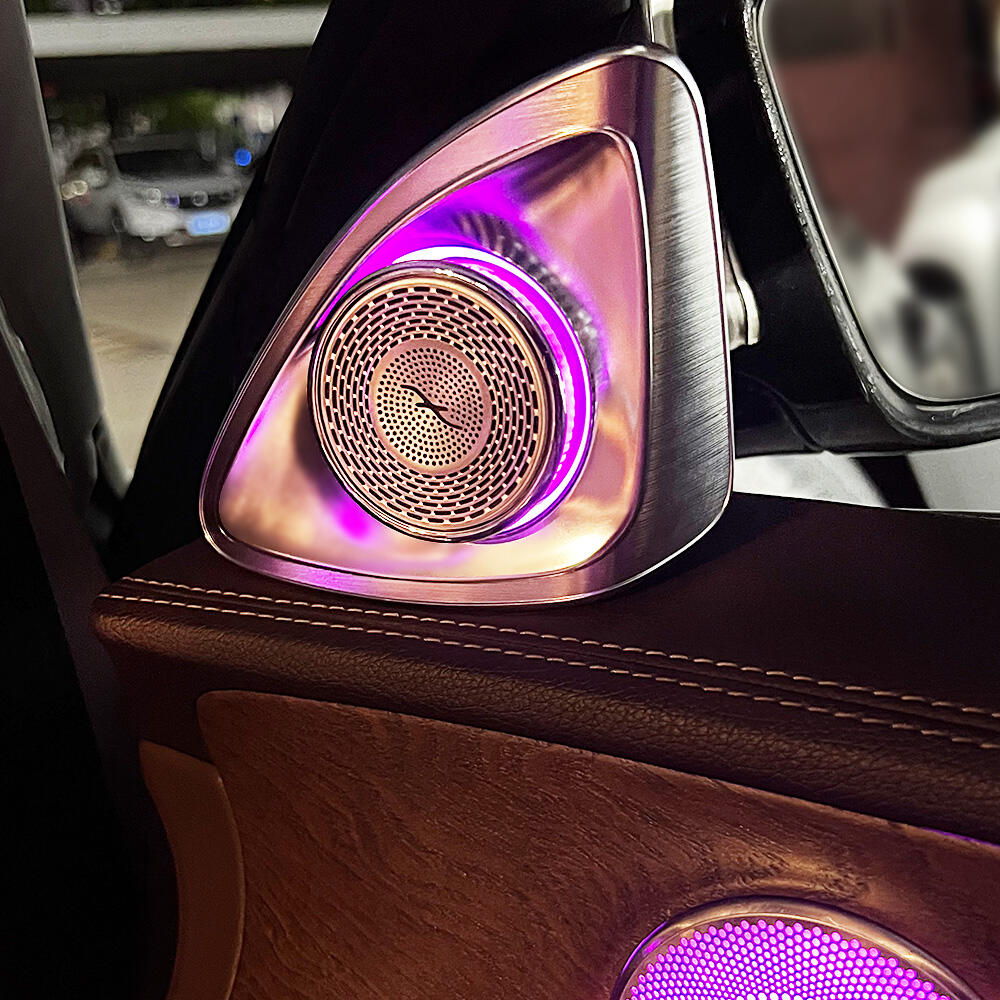
The heart of Burmester's 3D speaker tech lies in something called wave field synthesis, which basically works by recreating sound fields using careful control over when, how, and at what strength each sound wave hits our ears. Instead of the usual left-right or surround sound setup we're all familiar with, these systems pack up to 31 different drivers throughout the space. Think of things like tiny speakers mounted high above passengers' heads, bigger ones tucked down near their feet, even some built right into the seats themselves. All these components work together to create sounds that seem to come from literally anywhere inside the cabin space - sometimes from above someone's head, other times from beneath their seat, or even right between people sitting next to each other. The vertical spread of sound comes from carefully timed tweeters and mid-range speakers working in harmony, while sophisticated digital signal processing constantly tweaks the timing differences between drivers down to fractions of a millisecond. At this level of precision, the system taps into how humans naturally hear with both ears, tricking our brains into sensing not just where sounds are coming from but also how far away they are and what direction they're moving in. The result? A listening experience so immersive that it feels like the speakers themselves have disappeared entirely.
Real-World Effect: Height, Depth, and Movement Perception in the Cabin
What we get is a truly immersive 3D audio experience where rain seems to actually drop down through the moonroof. The strings sit in different spots vertically too - violins right at our ears while cellos hang back lower and behind us. Even those big cinematic helicopter sounds move smoothly from floor to ceiling as if they're flying around the cabin itself. All these amazing spatial effects come from Burmester's special HRTF modeling technology. This system adjusts how frequencies work between our ears and when sounds reach each one at slightly different times, just like real life but inside a car where everything echoes so much. When people actually sat in various cars during tests, most said the sound felt about 42% bigger than what regular high end surround systems offer. So it's not just about what sounds good subjectively either, there are actual measurable improvements in how our brains perceive this spatial audio.
Mercedes-Benz Audio Upgrade Paths: Matching 3D Speaker Capability to Your Model
Trim-Based Progression: From Stage A (C-Class) to Reference (S-Class/Maybach) 3D Speaker Systems
Mercedes-Benz organizes its 3D audio tech across different car models and trim levels. At the entry point we find Stage A systems in basic C-Class cars. These setups provide decent surround sound with around 10 to 12 speakers and some basic digital signal processing, though they miss out on vertical channels and those fancy wave field synthesis features. Moving up the ladder, mid range E and G Class models typically come with Stage B configurations featuring between 12 and 16 speakers. They include better amplifiers and start adding those overhead channels from earlier generations. The top dog Reference tier system is reserved exclusively for S-Class, EQS, and Maybach models. This premium setup boasts an impressive array of 31 speakers, complete with special ceiling mounted drivers, seat vibrations, and a powerful 1750 watt multi channel amplifier. What really sets these apart? Only the Reference systems have that factory calibrated acoustic compensation built in. It takes into account everything from how the cabin shapes sound waves to materials absorbing noise and even how the car itself resonates, making sure the audio stays accurate in space without needing any adjustments from the driver.
Aftermarket Viability: When and Why a Full 3D Speaker Retrofit Makes Sense
Doing a complete Burmester 3D speaker retrofit outside of what comes from the factory just doesn't work out very well in practice. The system relies on Mercedes' special MOST fiber optic network, specific DSP firmware for each car model, and those amplifiers have to match the speakers exactly - none of these things are available to regular installers or documented anywhere public. When people try to retrofit these systems, they usually end up needing to replace almost everything: the head unit, all the wiring, amplifier modules, plus custom brackets for mounting. Costs typically go past $15k and there's still no assurance that the height channels will decode properly or stay calibrated over time. Still, there are some smart upgrade options available. Owners with E or G Class cars that already have overhead speaker mounts can sometimes add OEM compatible dome tweeters and get DSP tuning done through official Burmester service centers. For older models made before 2020 without built-in 3D capabilities, simply swapping out component speakers, installing a good quality subwoofer with lots of excursion, and running multiband room correction actually makes a noticeable difference. These changes deliver real audio improvements, with sound levels reaching over 105 dB while keeping distortion below 1%, all without breaking the original system design principles.
Optimizing and Troubleshooting the Burmester 3D Speaker Experience
Cabin Acoustics Limitations and Software Compensation Strategies
Car interiors present real headaches when it comes to spatial audio quality. Glass and metal surfaces bounce sound around a lot, creating those annoying early reflections we all know too well. The weird shapes inside cars also lead to standing waves that mess with how sounds are perceived. Plus, materials like leather seats and carpets soak up midrange frequencies in unpredictable ways across different vehicle models. All these factors combine to make accurate sound localization and stable imaging pretty difficult to achieve consistently. What sets Burmester apart is their digital signal processing solution. Instead of relying on extra hardware fixes which just add complexity, they've developed two carefully tuned software layers specifically designed to tackle these cabin-specific acoustic issues head on.
- Precision Signal Delays: Compensates for asymmetric speaker distances by delaying output from closer drivers—ensuring all wavefronts converge at the listener’s ears simultaneously.
- Adaptive Multiband Equalization: Dynamically corrects frequency imbalances—for example, boosting 300–500 Hz energy attenuated by fabric seats while attenuating 2 kHz peaks caused by windshield reflections.
This real-time acoustic modeling transforms the cabin from an acoustically hostile space into a purpose-tuned listening environment—preserving spatial resolution without requiring physical modifications.
Calibration Best Practices: Seat Position, DSP Tuning, and Source Format Requirements
Optimal 3D immersion requires alignment between hardware, software, and content:
| Calibration Factor | Action | Impact |
|---|---|---|
| Seat Position | Set DSP focus mode to driver or front passenger | Ensures wave field synthesis centers on the designated listener’s head position, maximizing vertical and lateral localization |
| DSP Tuning | Apply -3 dB subwoofer crossover slope and enable cabin resonance suppression | Prevents bass buildup in structural cavities, preserving clarity and transient definition in low-frequency effects |
| Source Format | Prioritize Dolby Atmos, DTS:X, or uncompressed 5.1+ PCM | Activates height-channel metadata and enables full 3D rendering—lossy formats like MP3 discard this spatial data entirely |
Avoid aggressive limiting during playback: cap peak output at 85% of speaker RMS rating to maintain dynamic headroom and prevent distortion-induced spatial collapse.