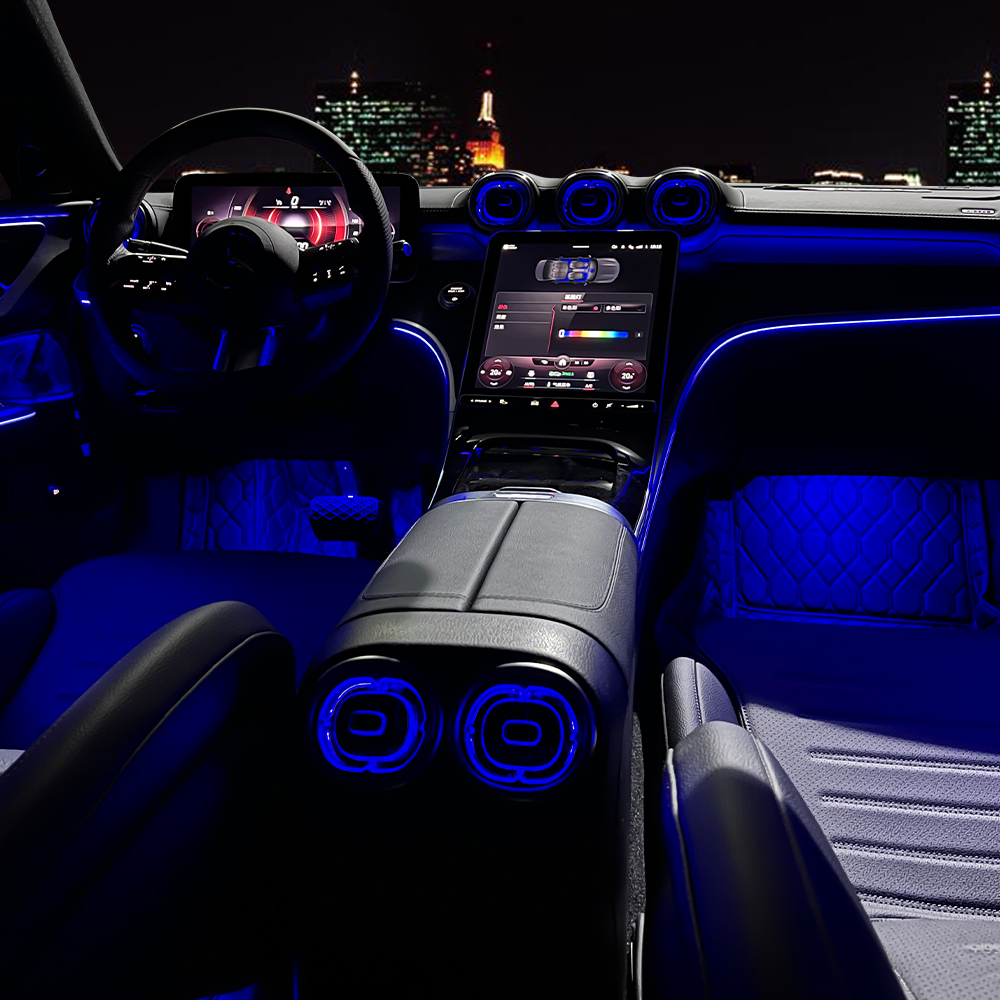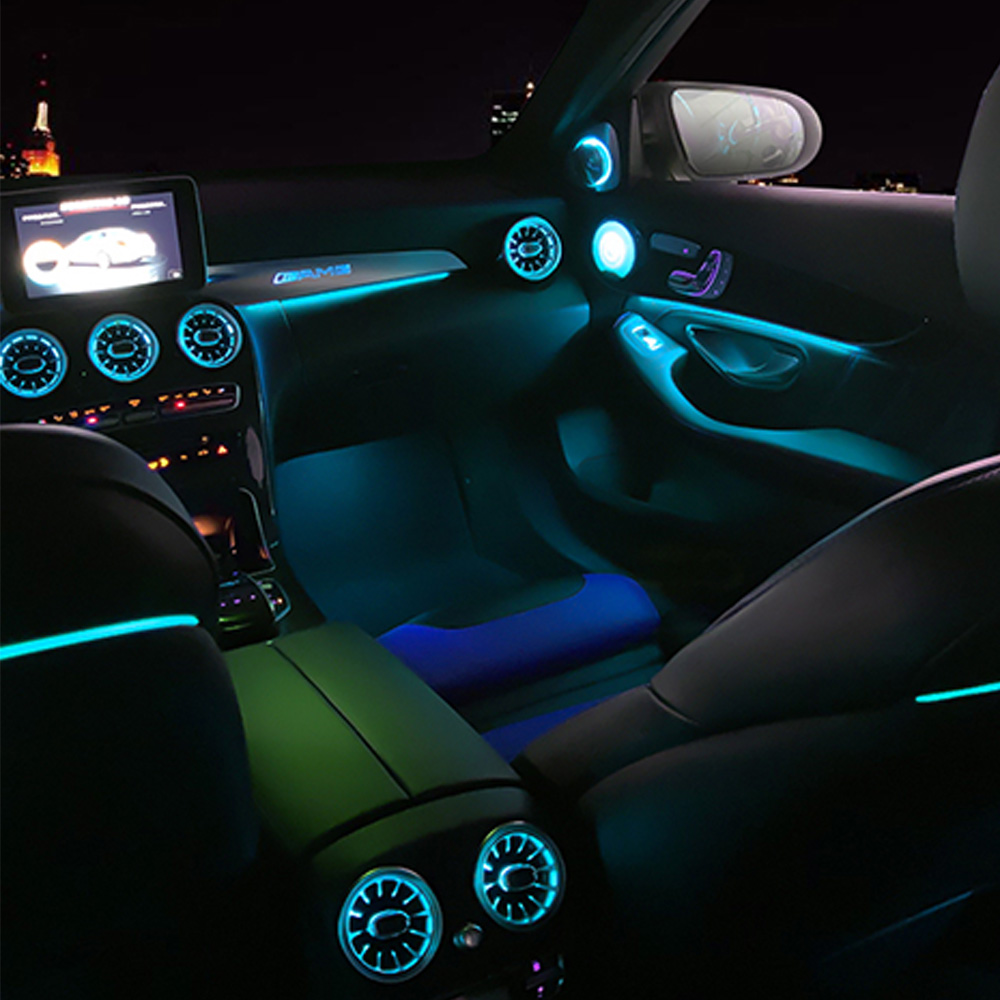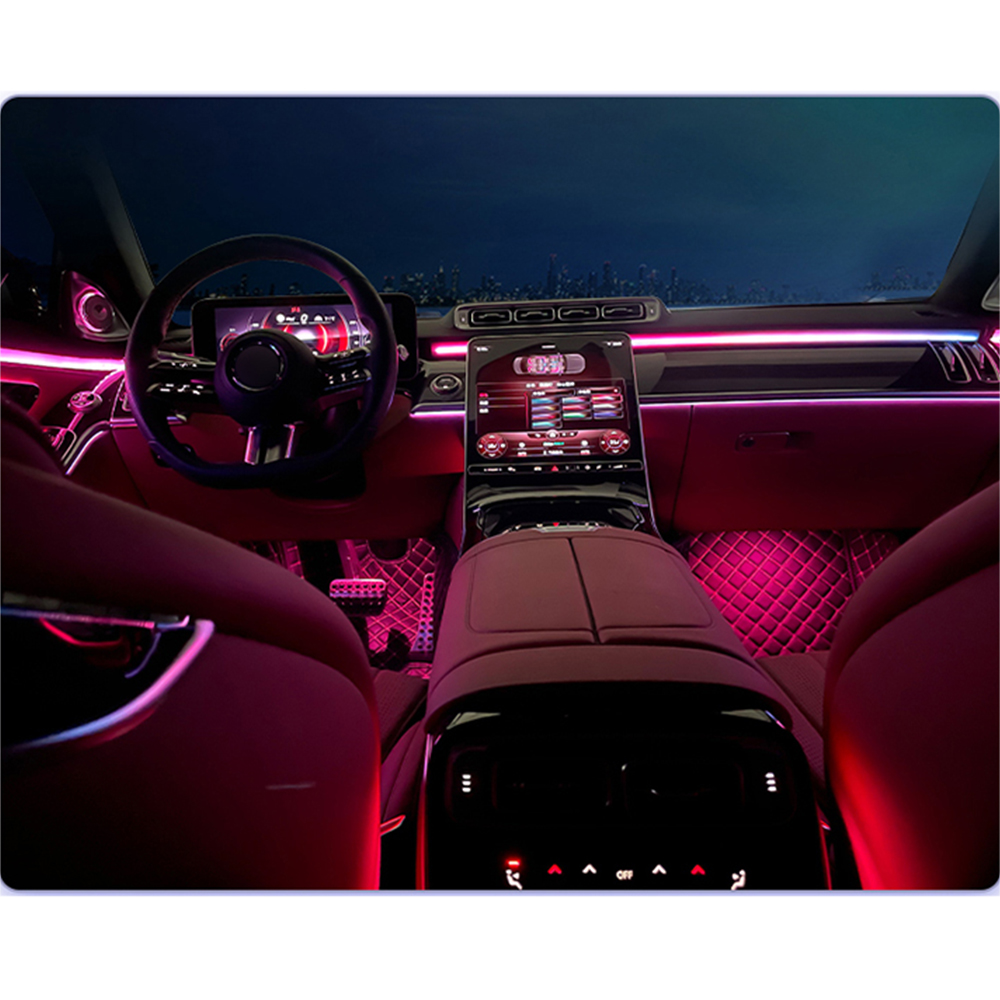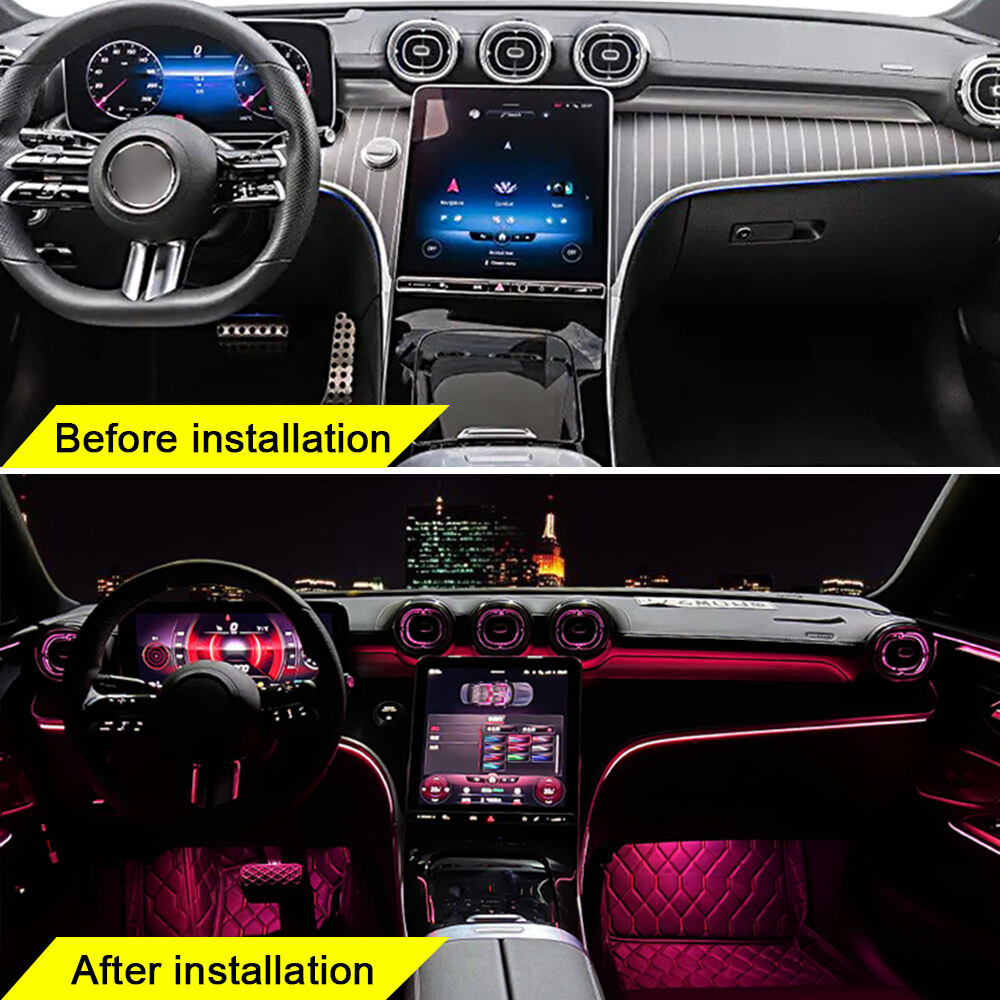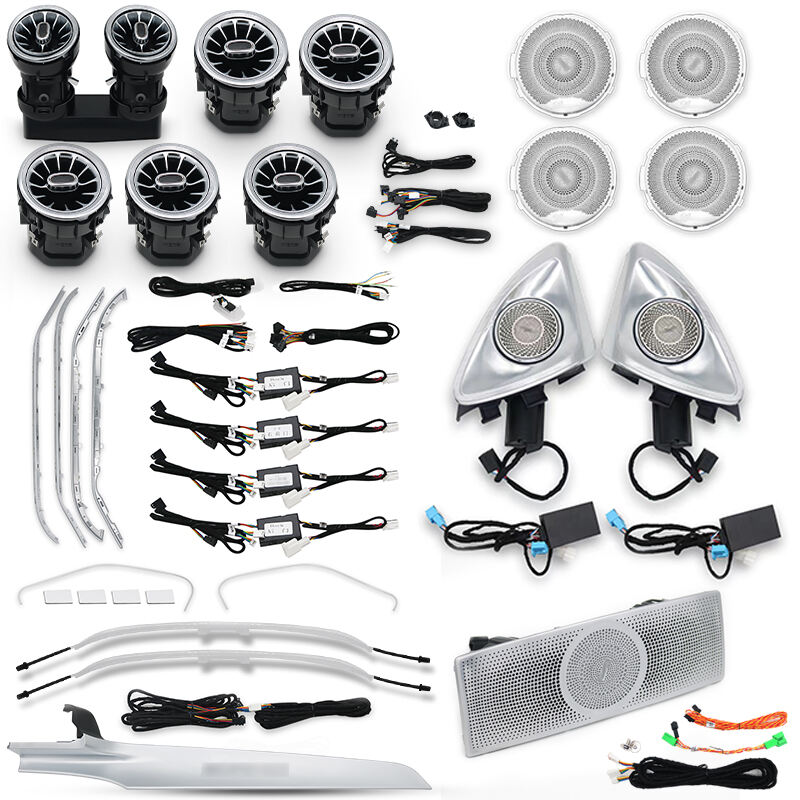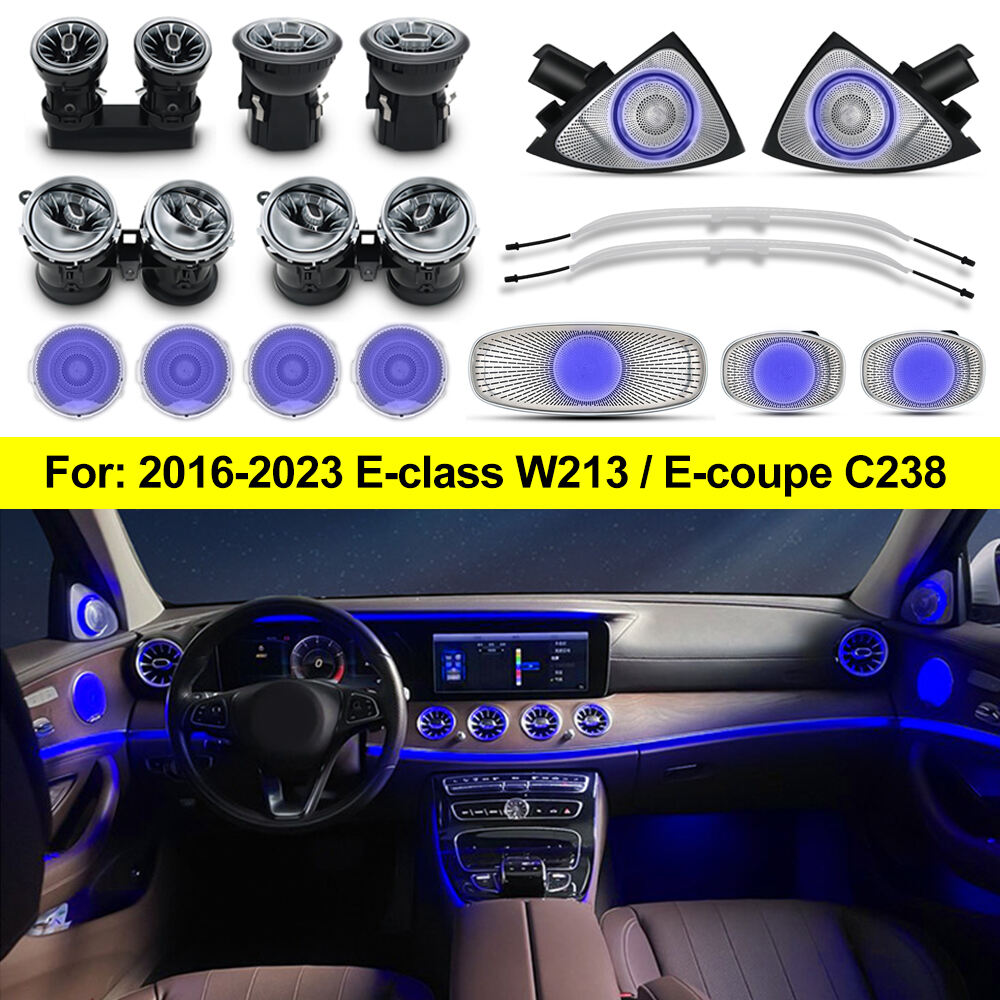

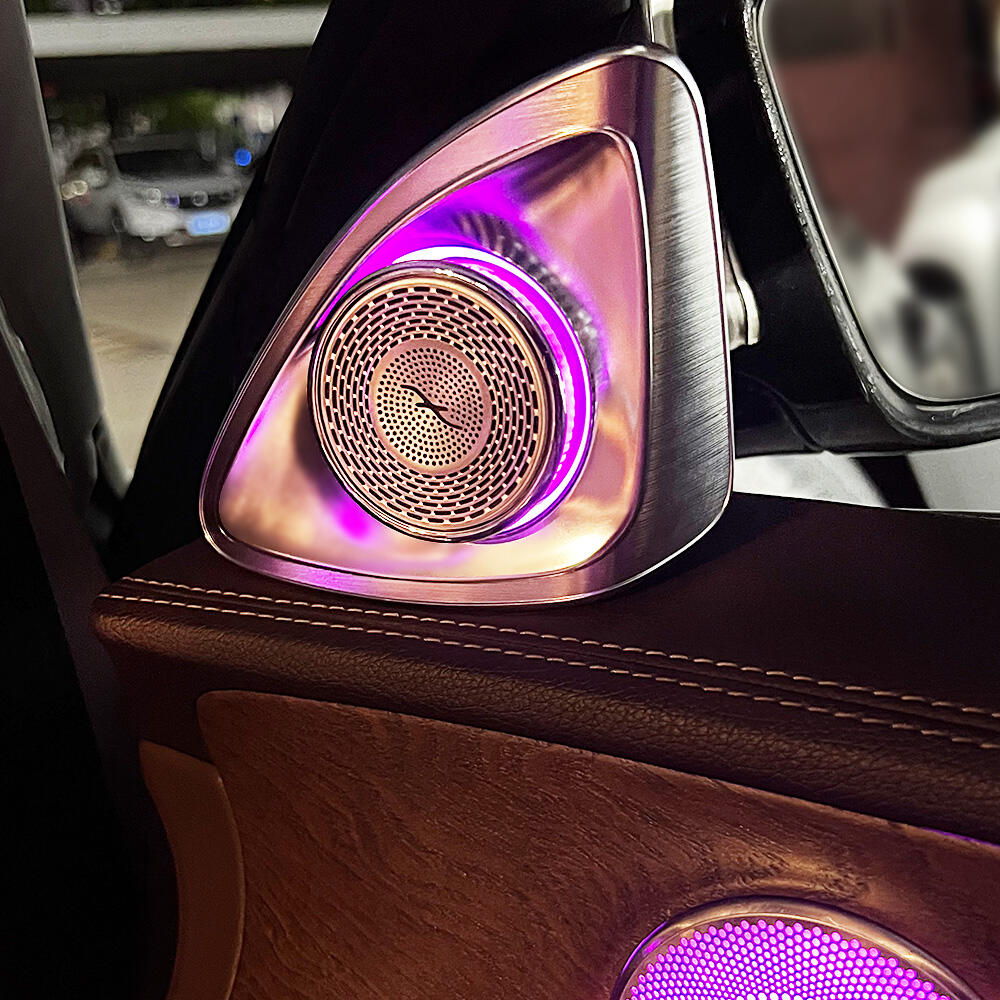
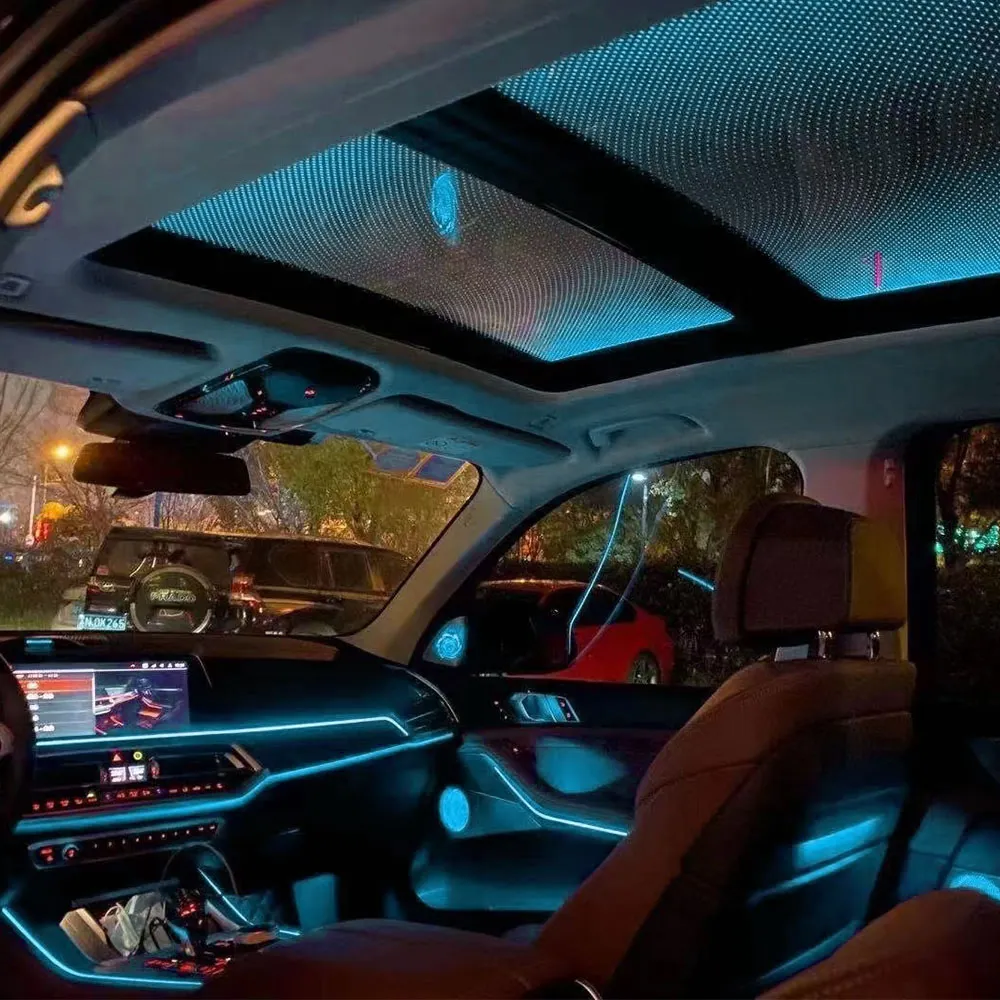
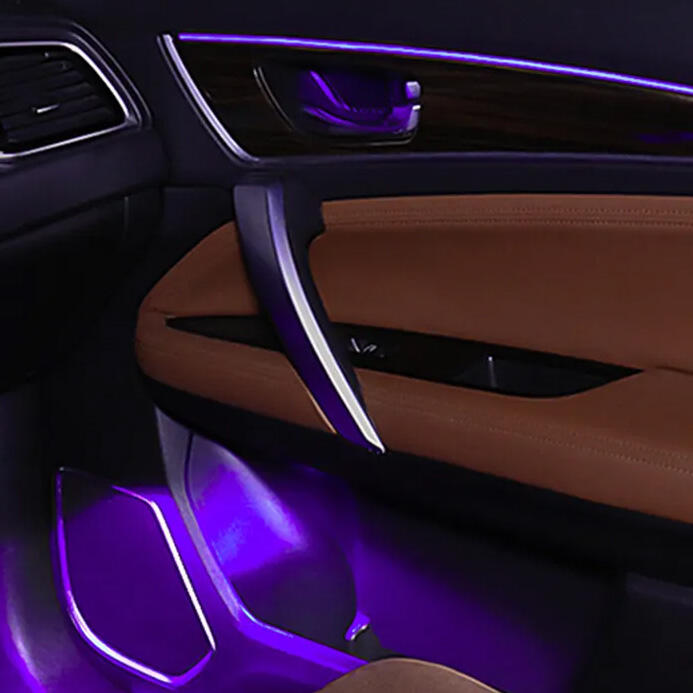
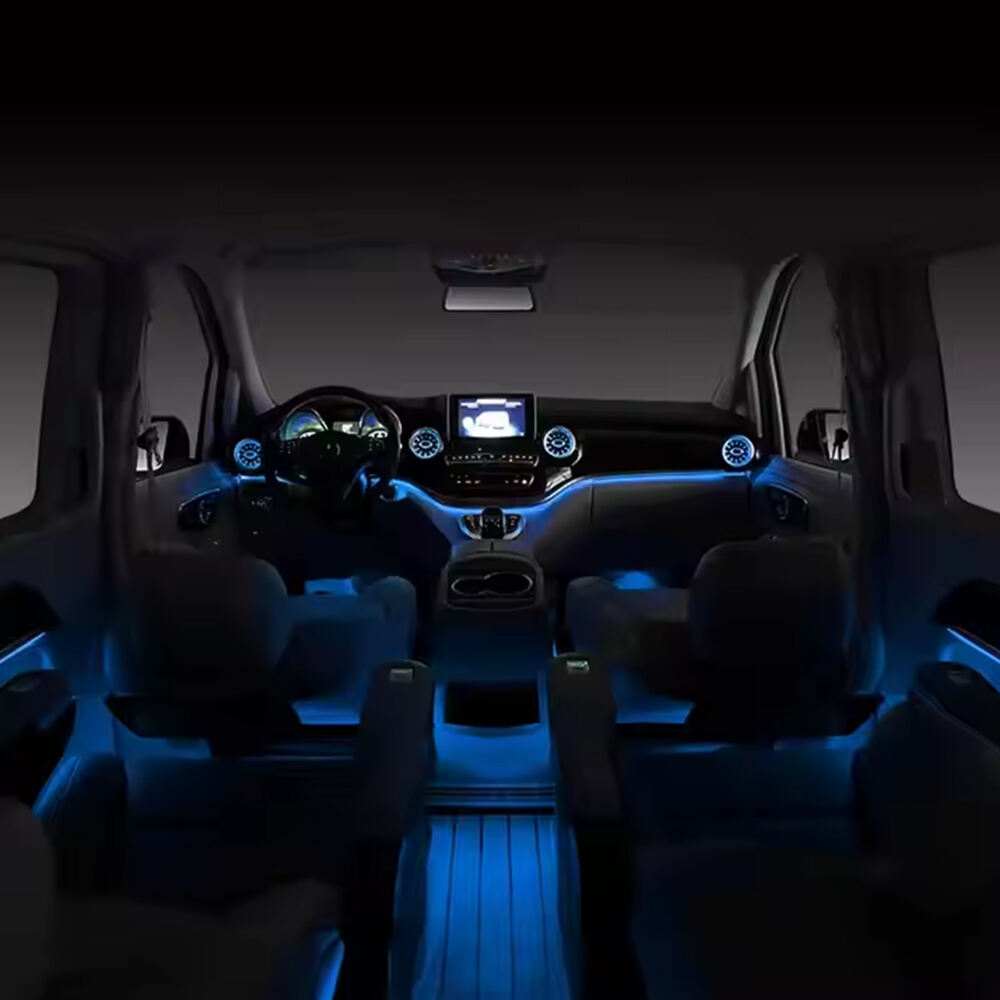
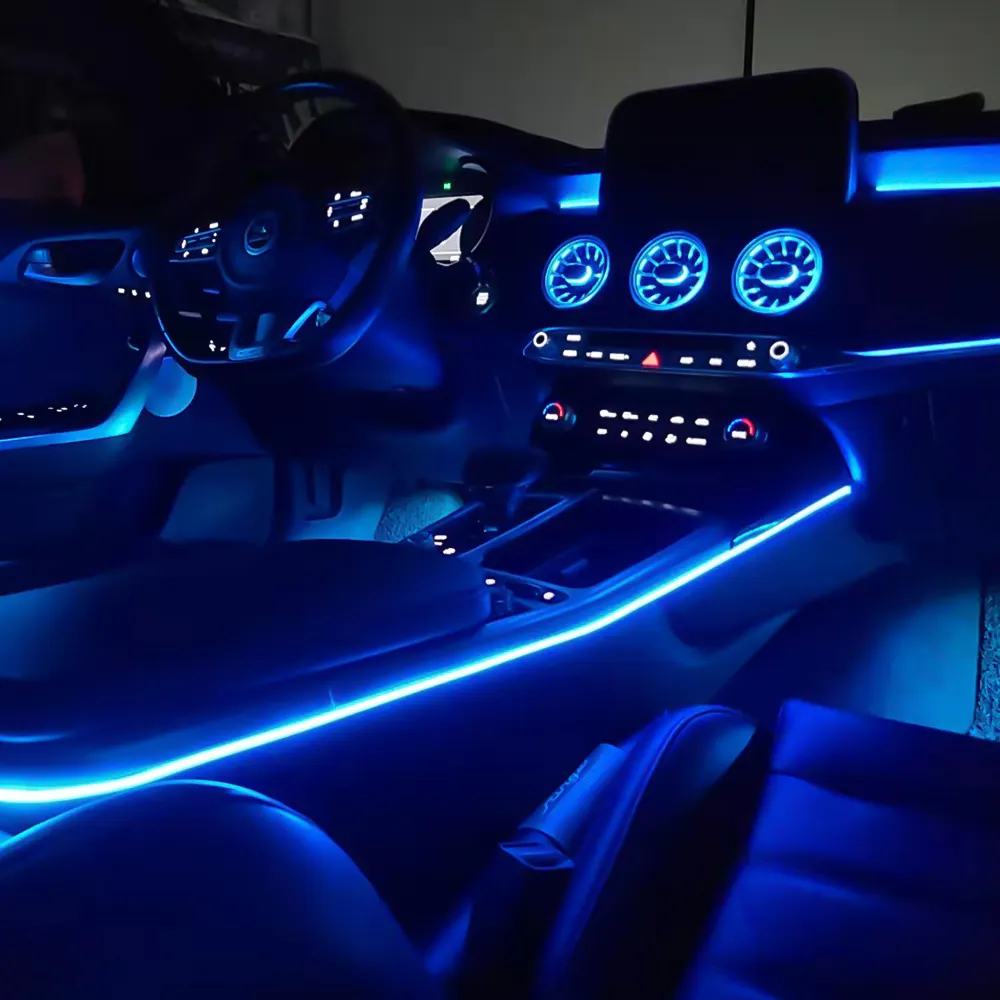
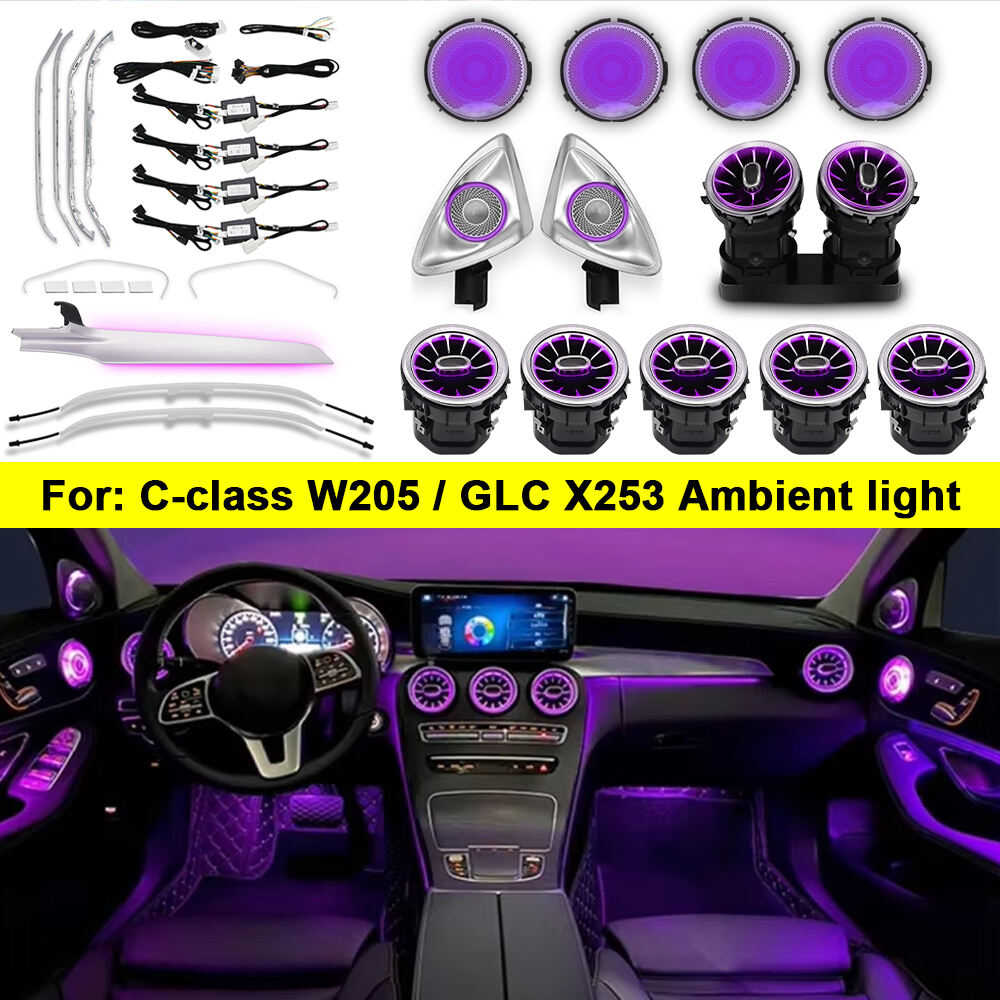
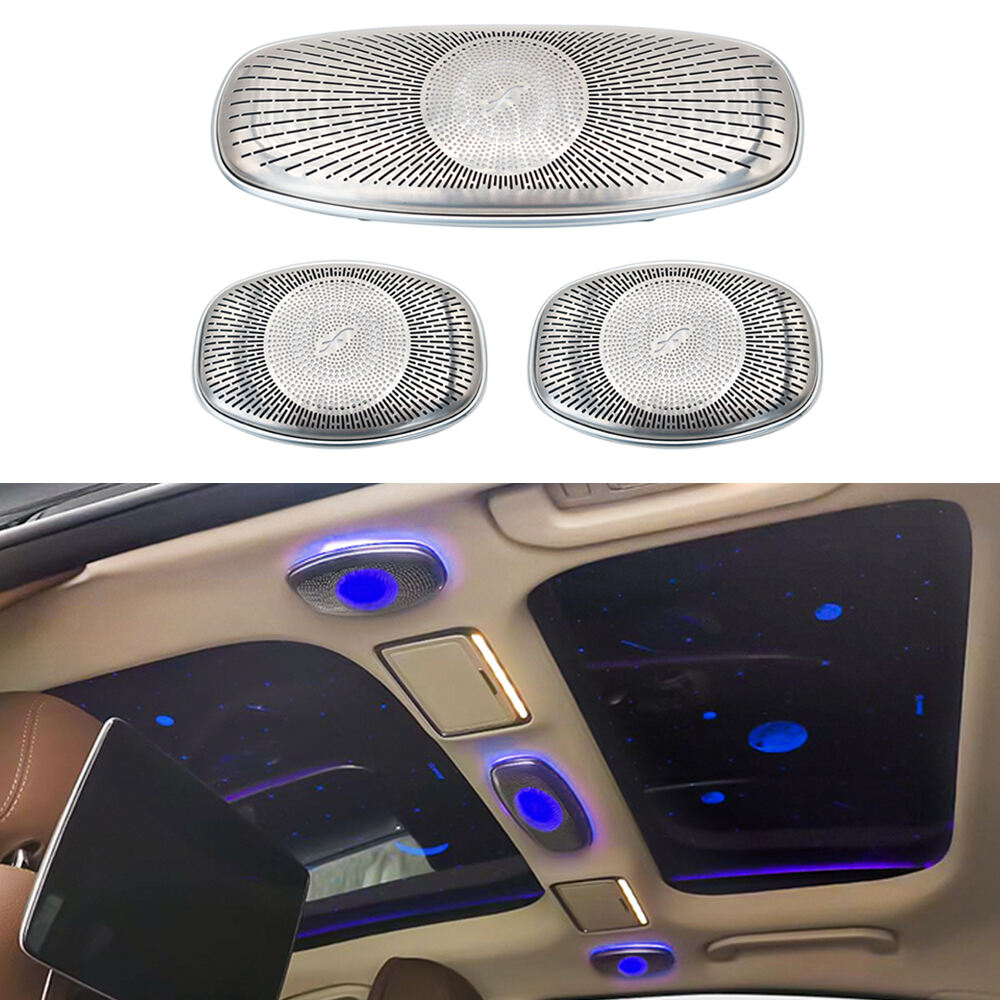
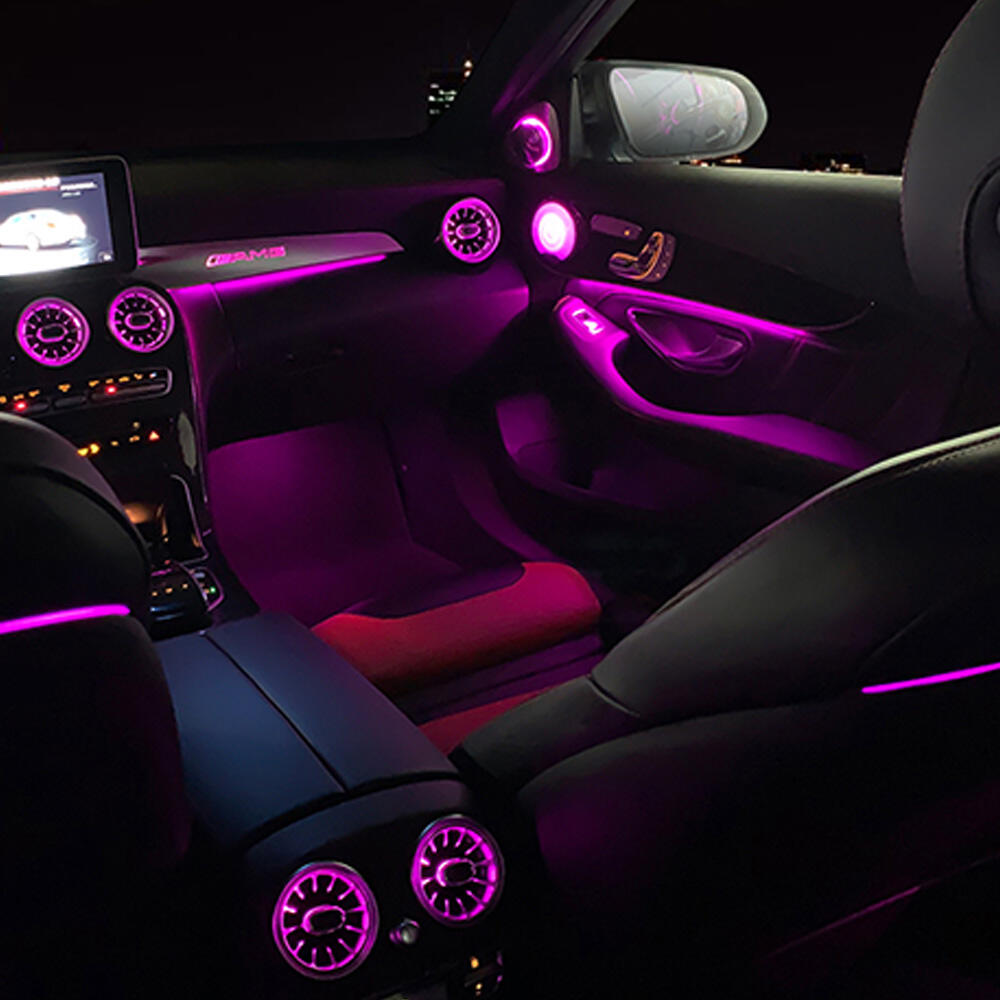
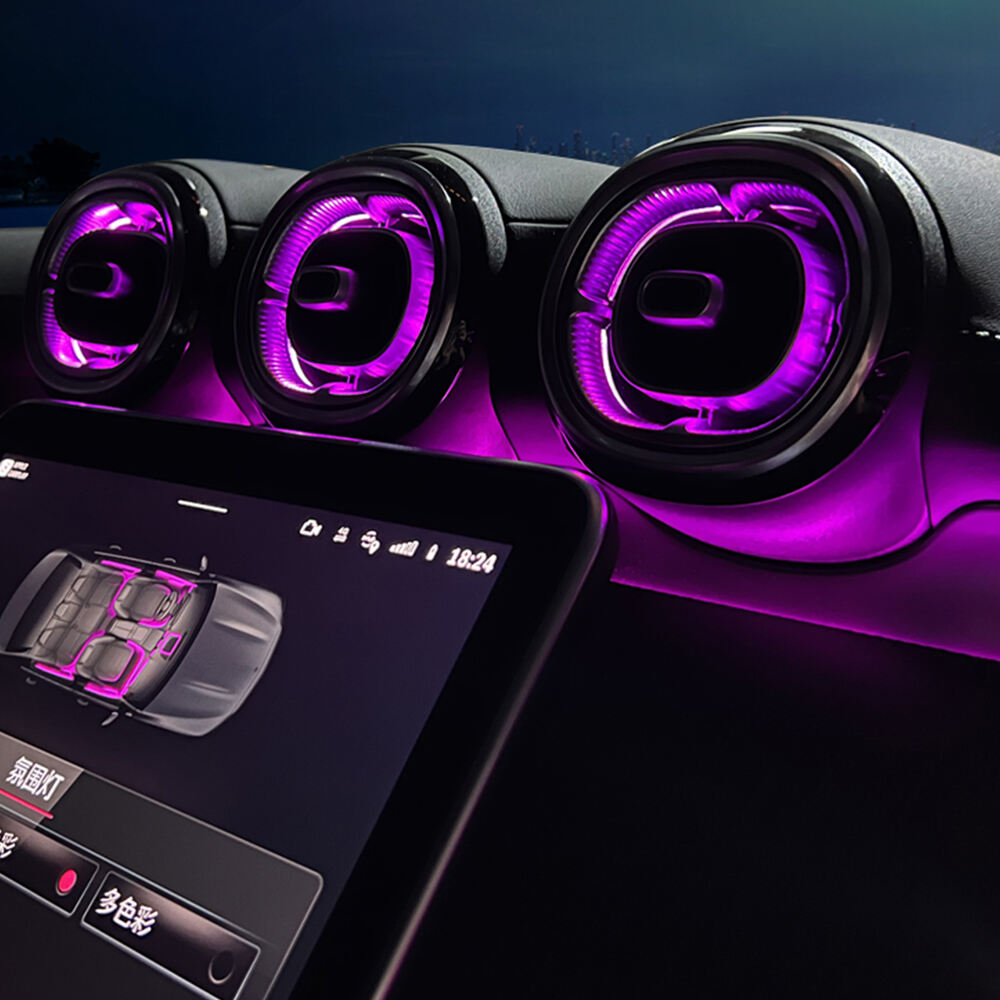
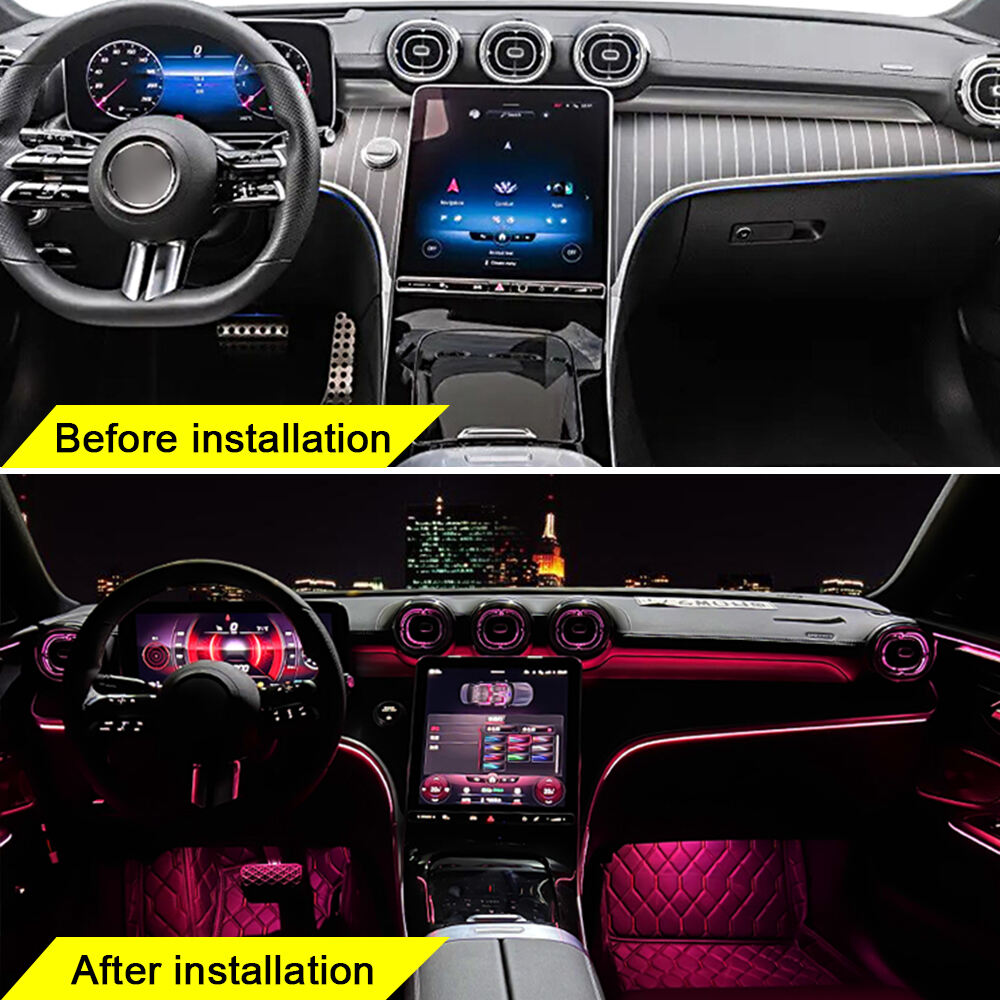
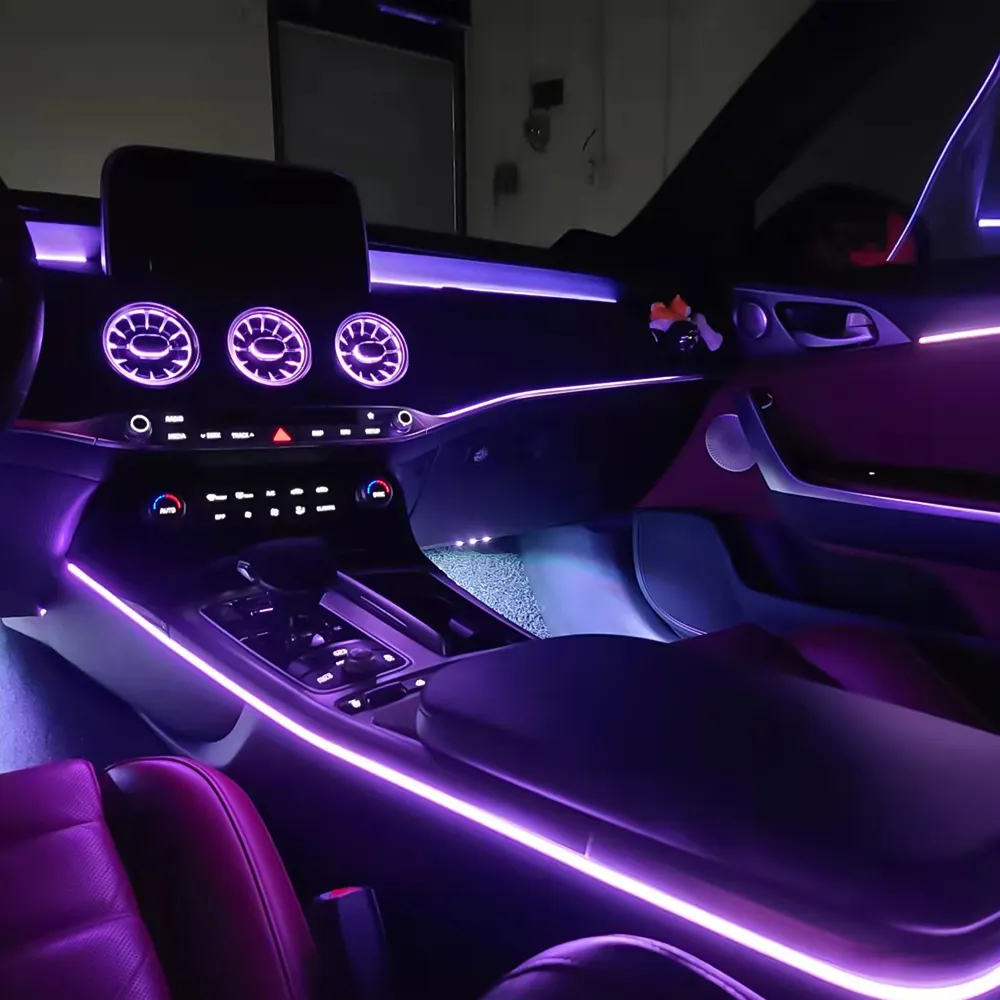
Mercedes ambient light installation is a precision process that balances technical accuracy with preservation of the vehicle’s original integrity, whether performed as a factory fit or aftermarket upgrade. Factory installation, integrated during vehicle production, involves seamless integration with the car’s electrical architecture, using dedicated wiring harnesses and connectors that interface with the CAN bus system to ensure synchronization with MBUX, driving modes, and other vehicle functions. Technicians follow strict protocols to position LED strips in pre engineered channels—avoiding interference with airbags, wiring looms, or moving parts—and secure them with automotive grade adhesives or clips that withstand temperature fluctuations ( 40°C to 85°C). For aftermarket installation, the process varies by kit complexity: basic plug and play systems (suitable for DIY enthusiasts) connect to OBD II ports or cigarette lighter sockets, requiring minimal disassembly of trim panels. Advanced kits, installed by professionals, may involve routing wires through door hinges, dashboard gaps, or under carpetting, using specialized tools to avoid damaging interior materials like leather or wood. Key considerations include voltage regulation (to prevent overloading the electrical system), waterproofing (especially in footwells and door panels), and calibration to ensure uniform brightness across zones. Global installation standards differ slightly—European markets emphasize compliance with ECE R10 for electromagnetic compatibility, while North America requires adherence to FMVSS 108 for light emission. Post installation testing is critical, involving checks for flicker, color consistency, and functionality with vehicle systems. Whether factory or aftermarket, Mercedes ambient light installation prioritizes non intrusiveness, ensuring the upgrade enhances the interior without compromising safety, durability, or resale value—making it accessible to owners worldwide, from casual DIYers to luxury car enthusiasts.