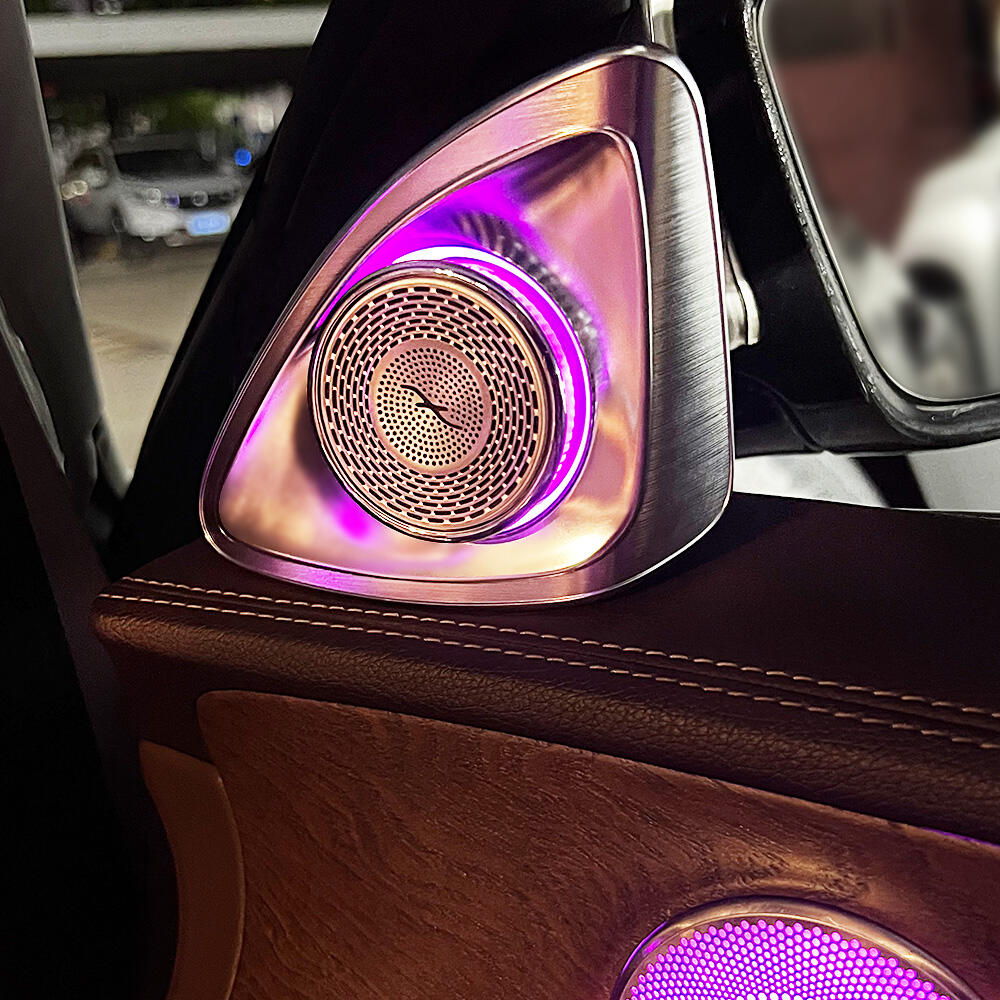
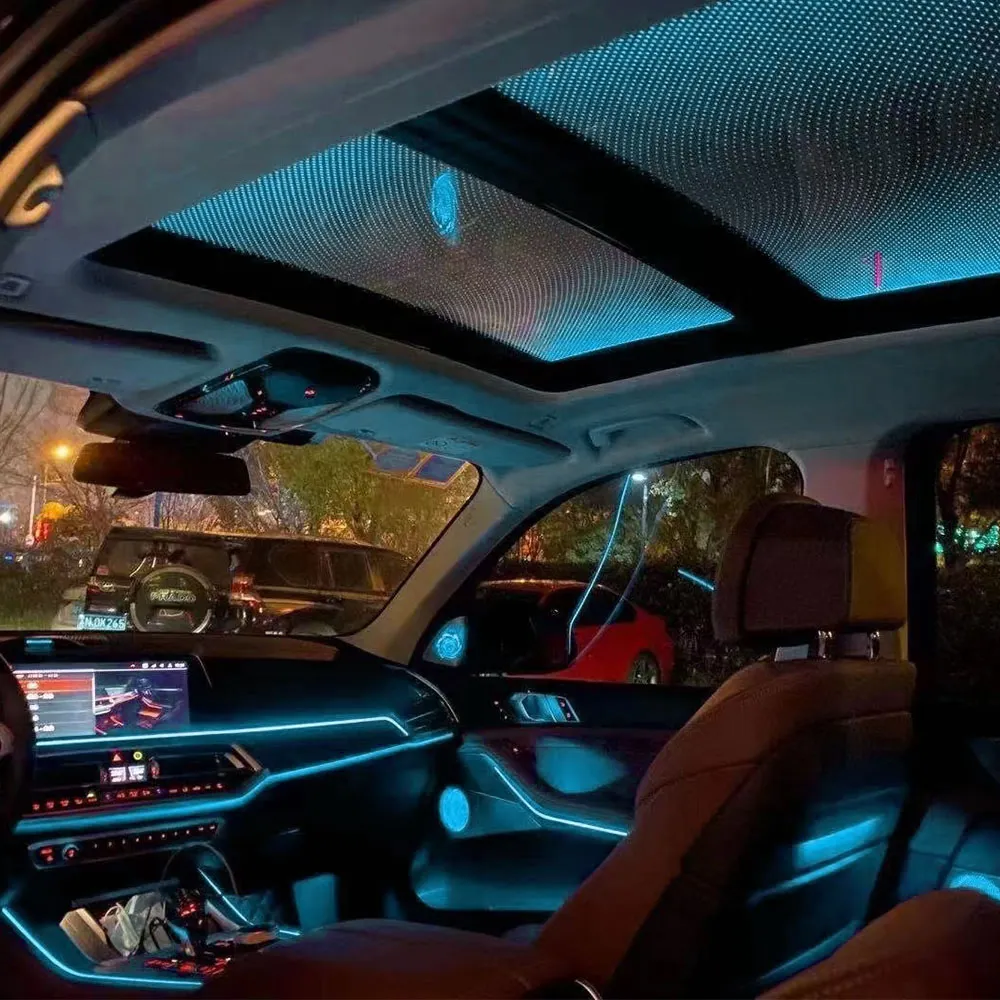
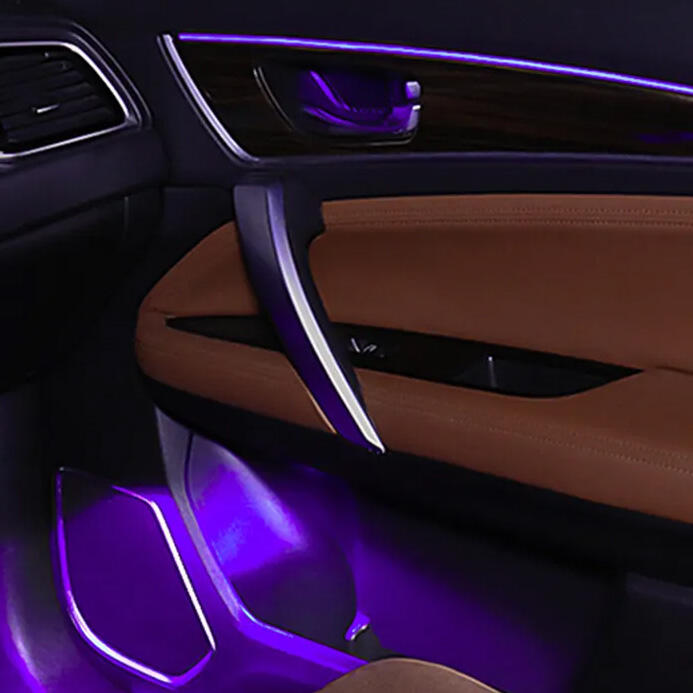
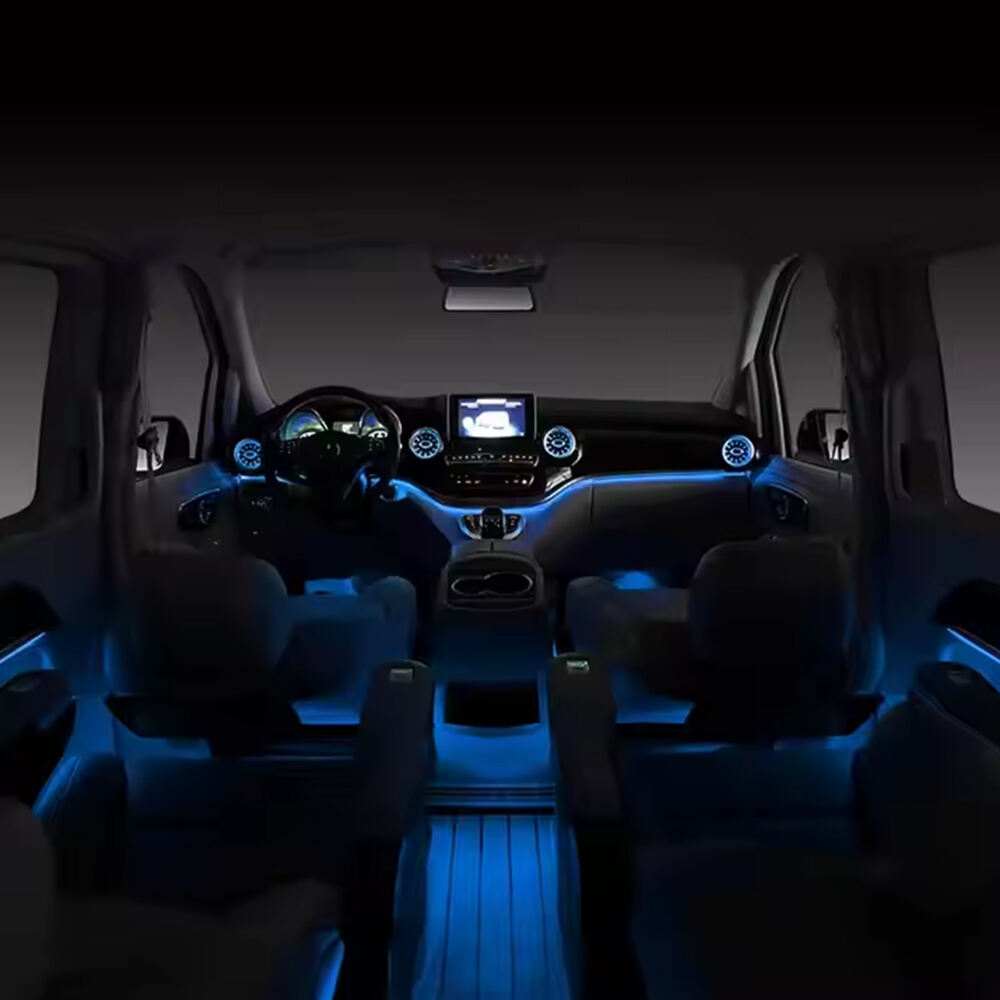
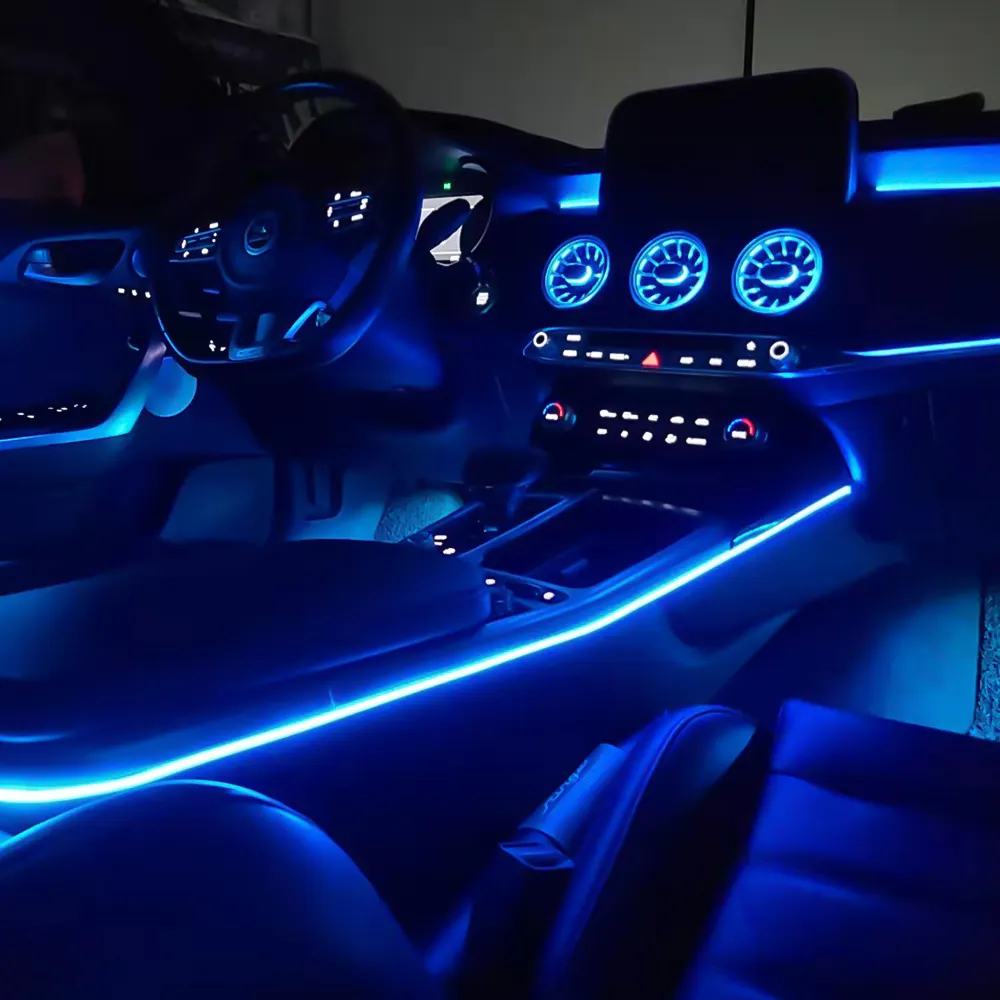
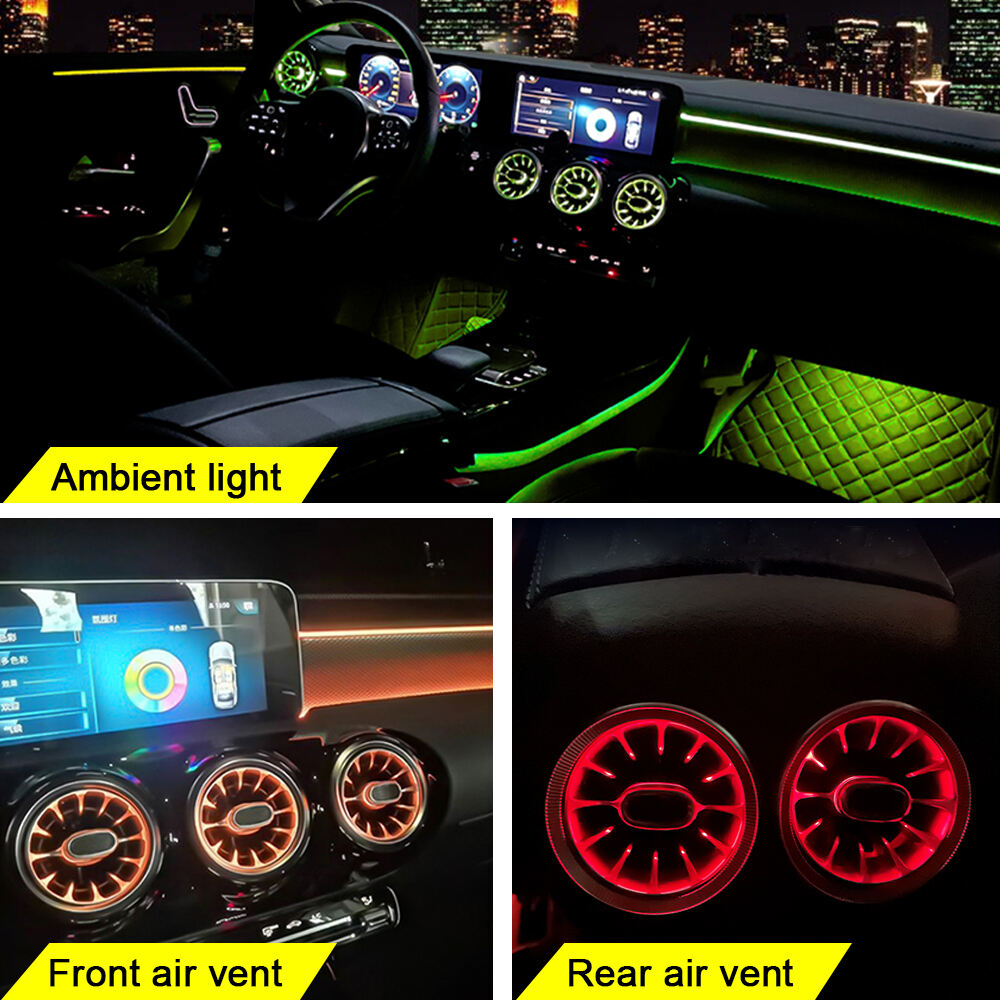
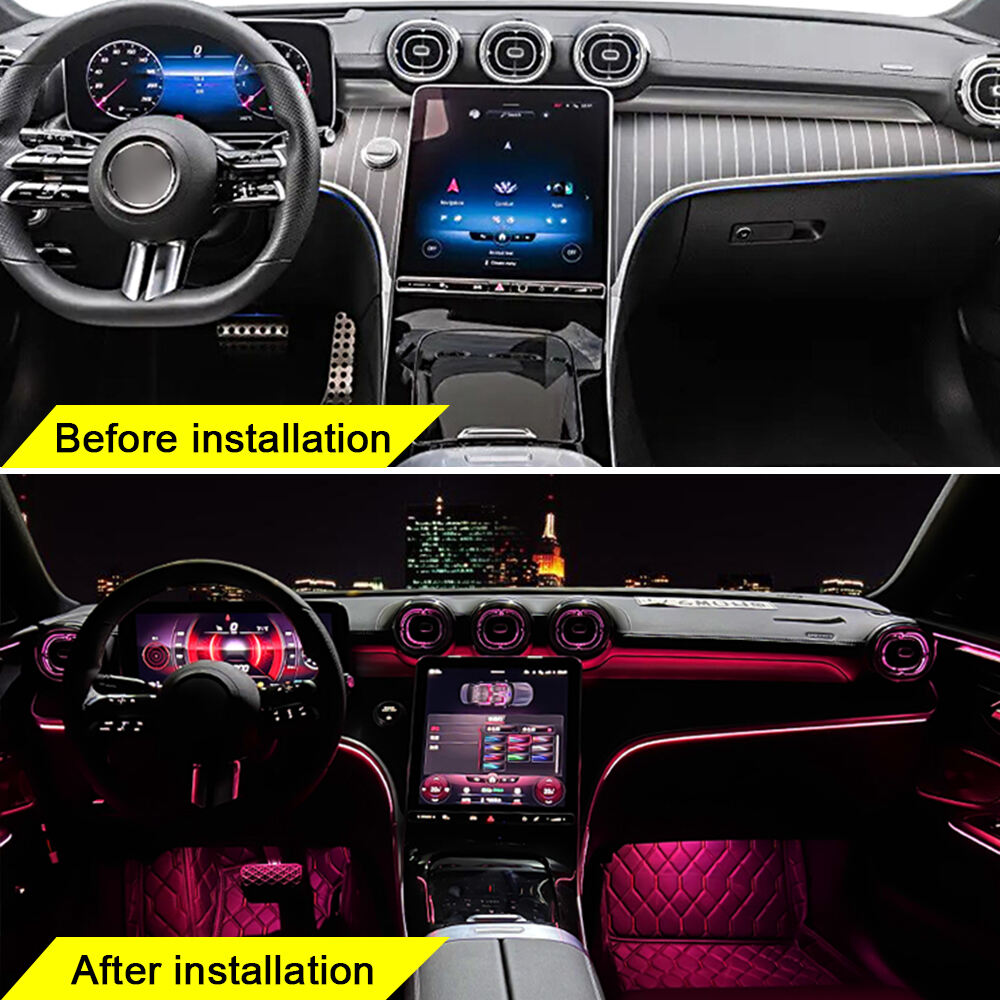
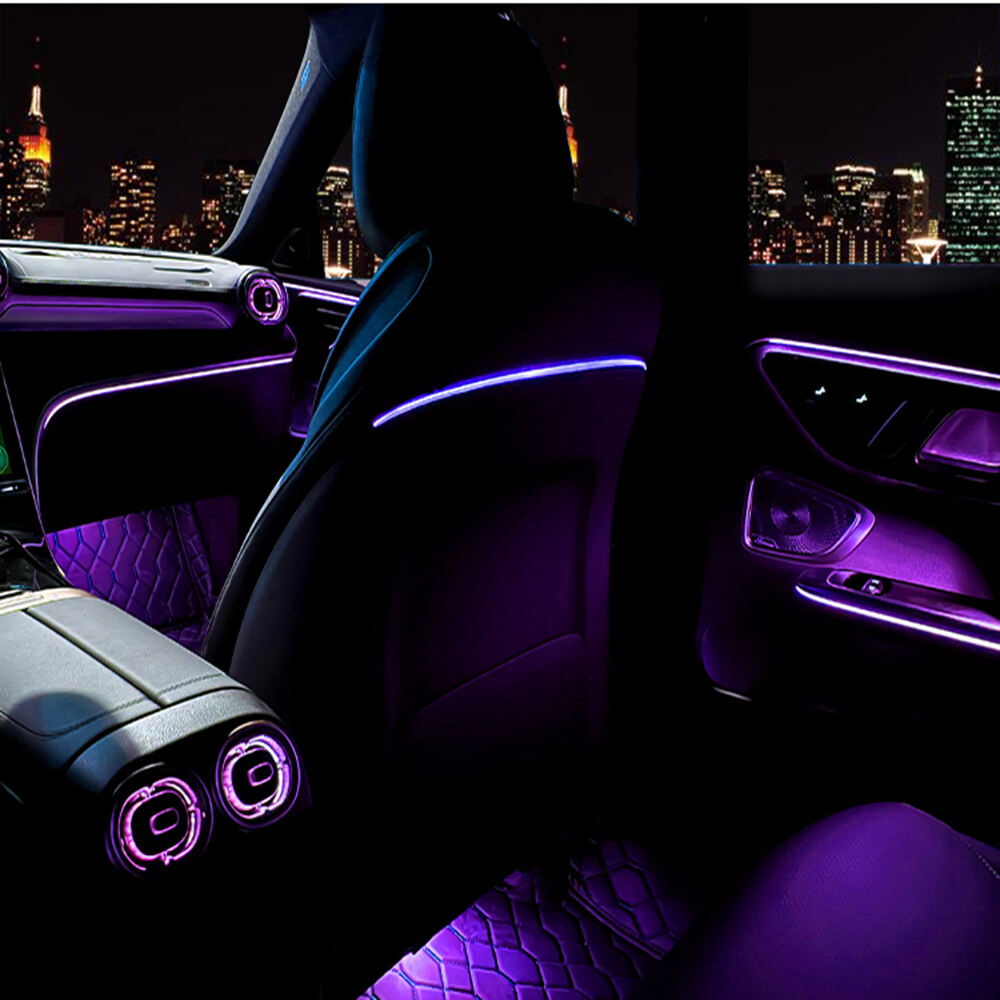
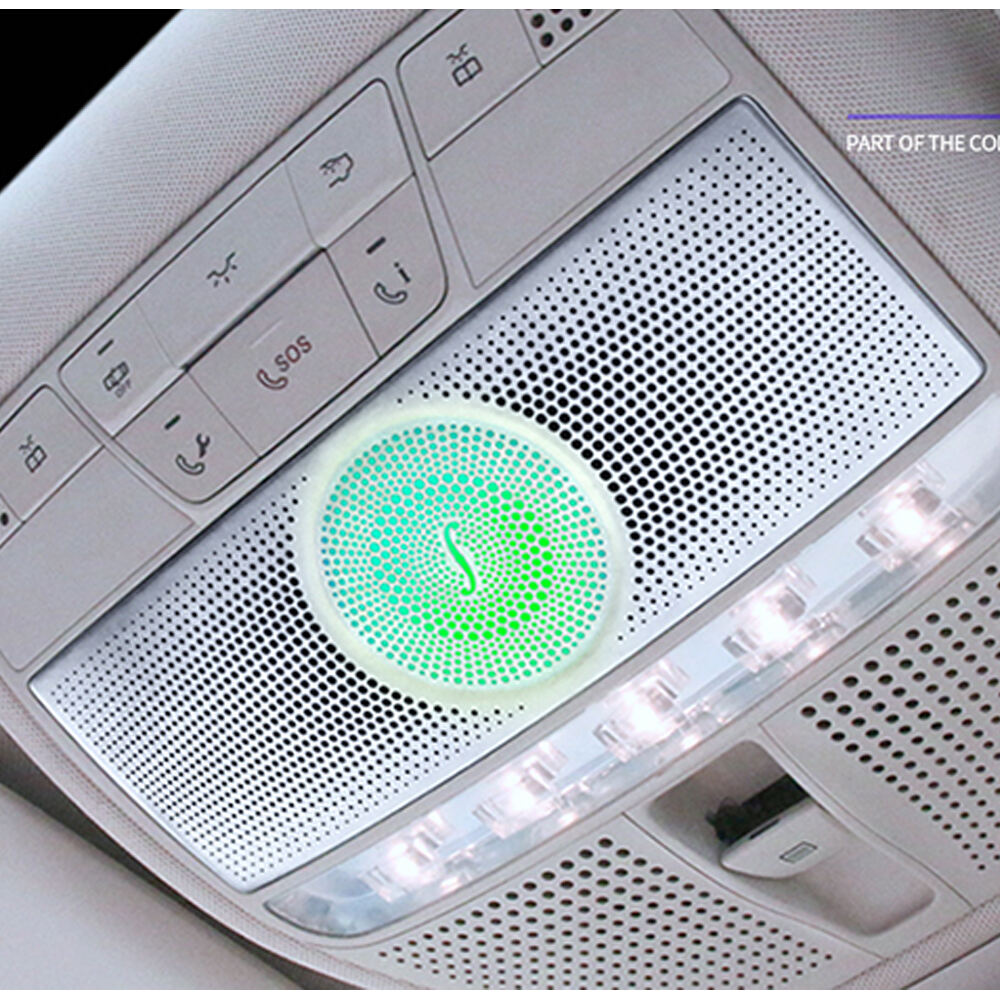
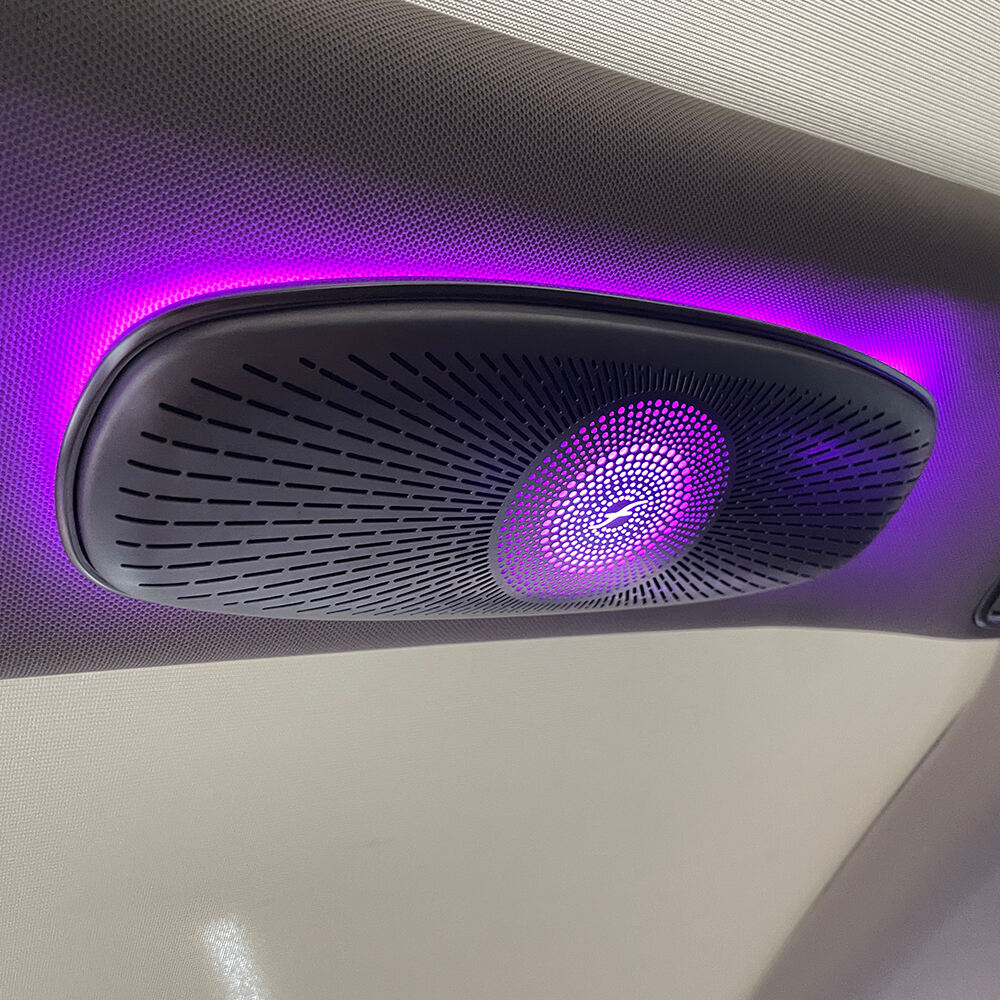
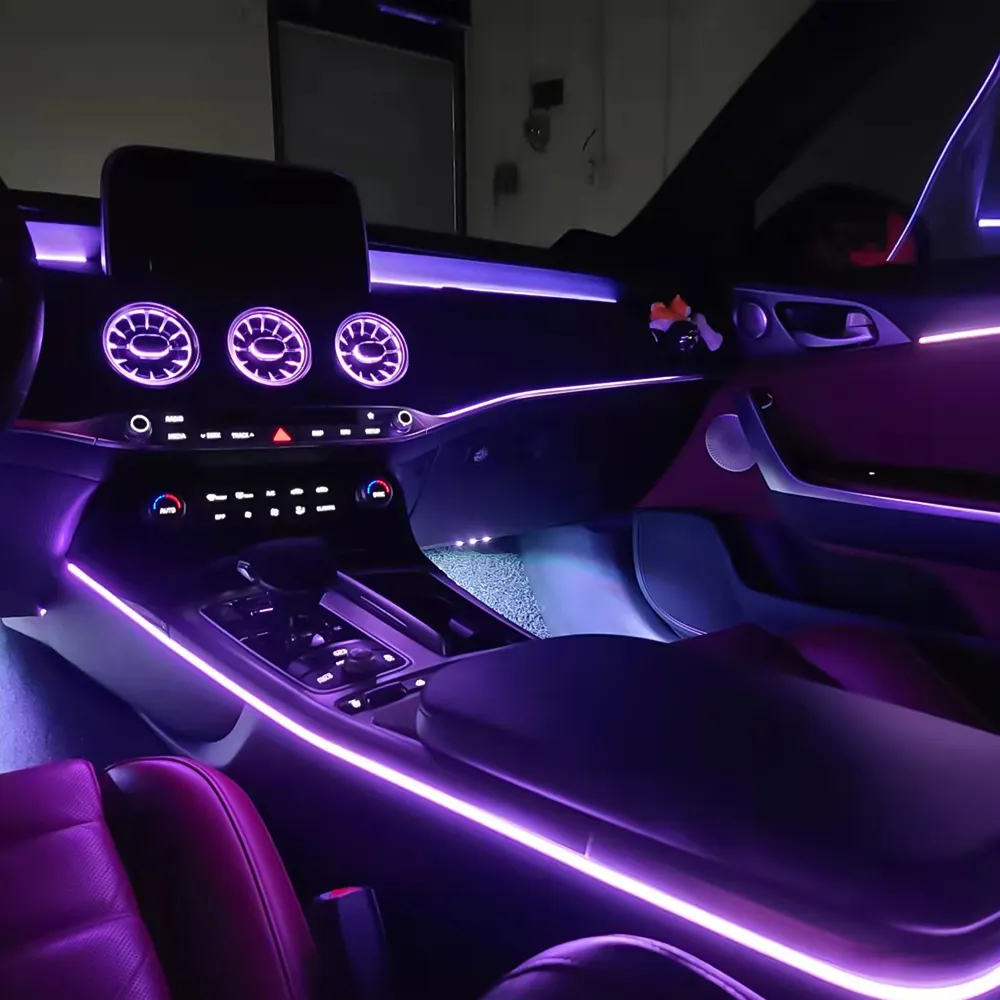
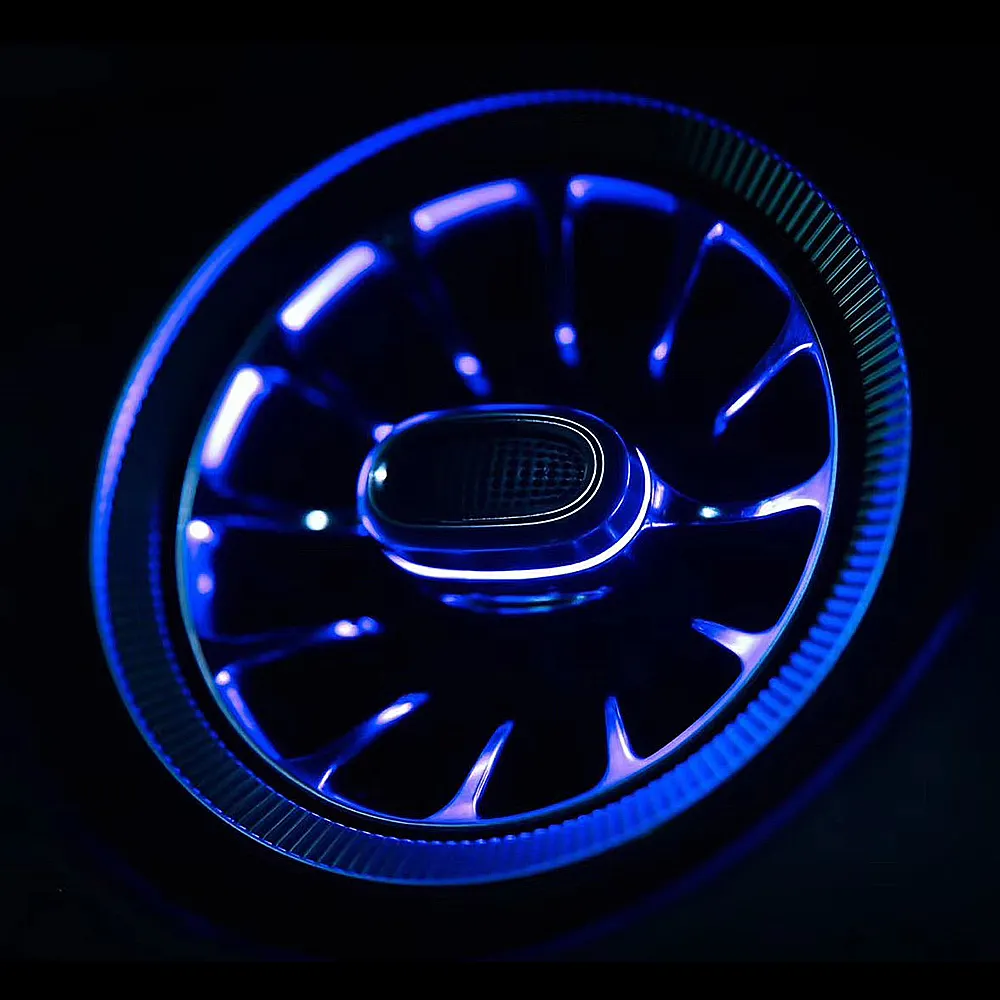
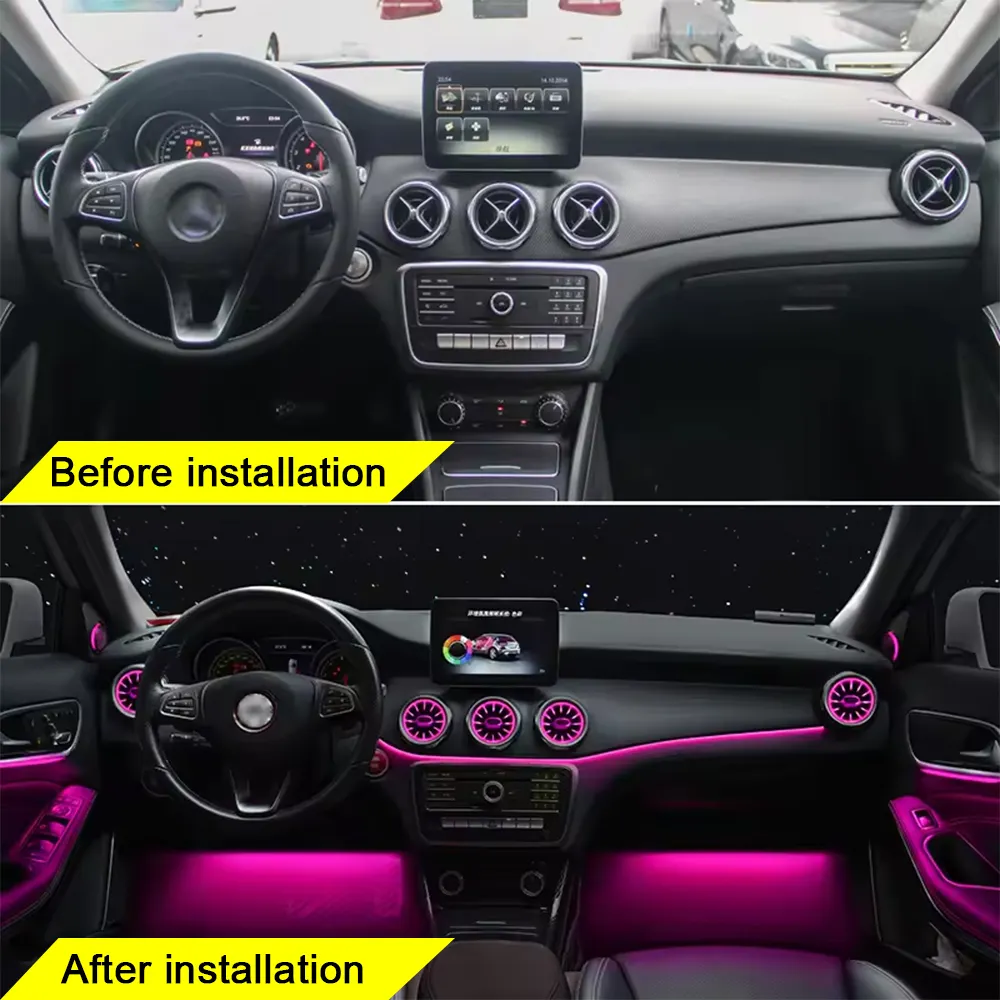
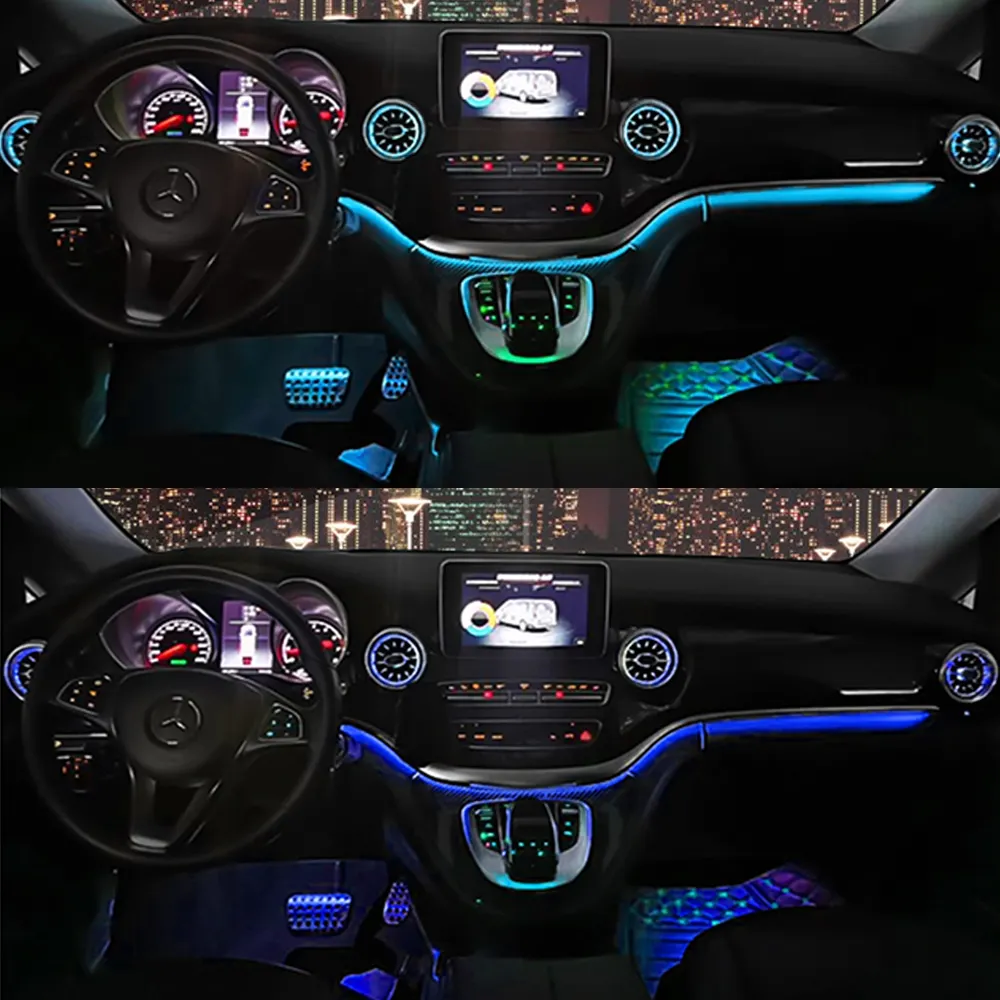
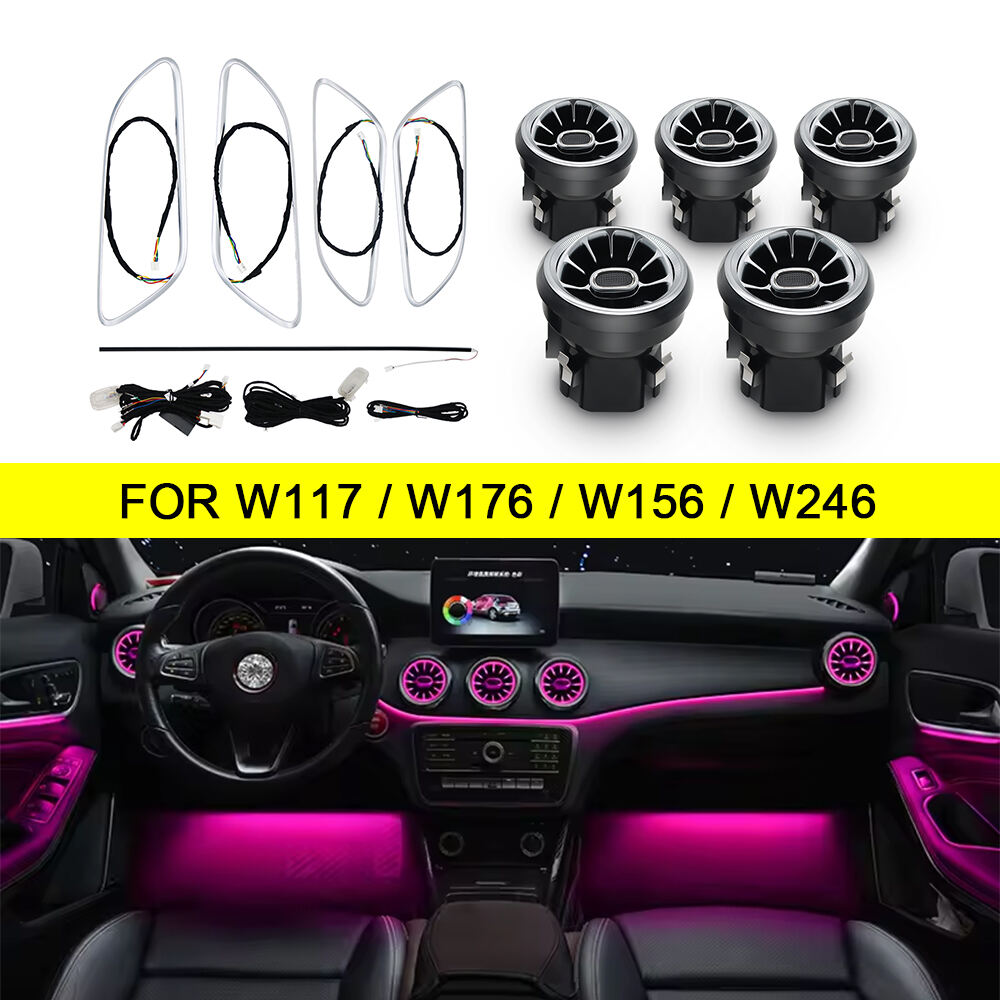
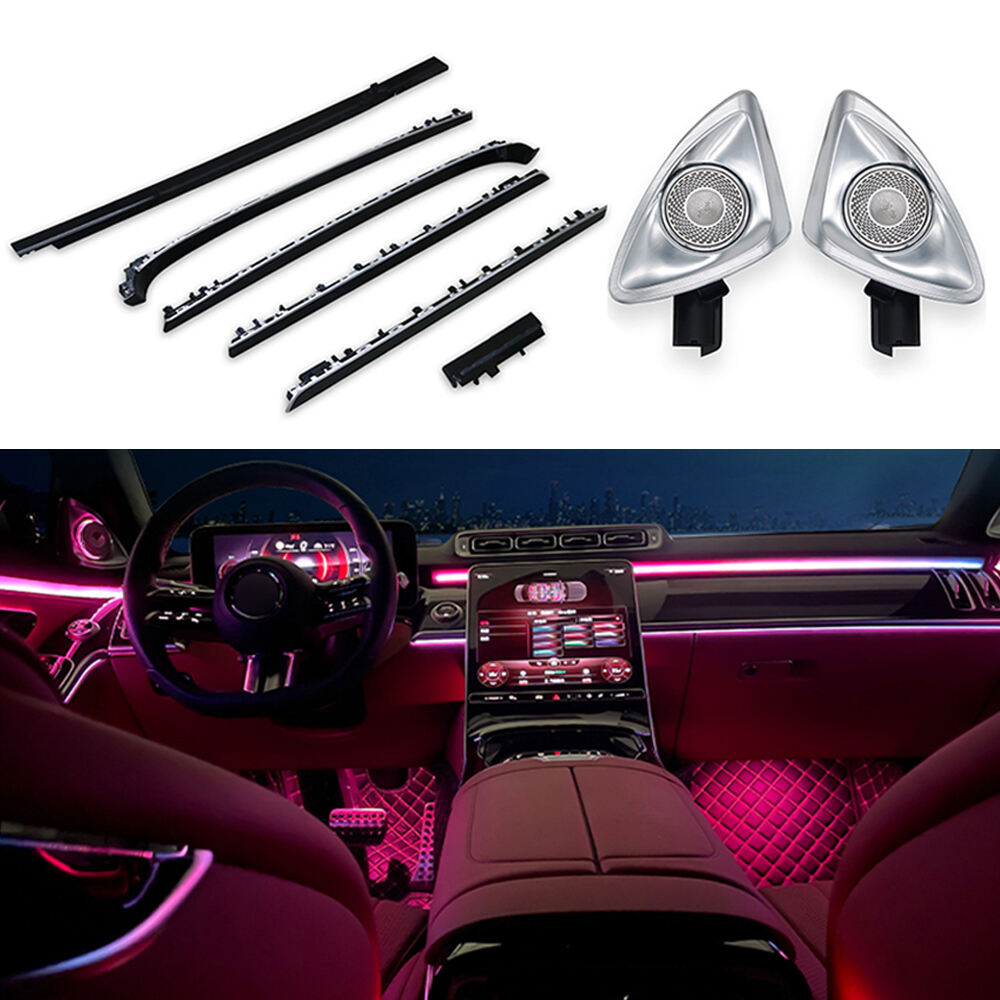
Mercedes ambient light effects represent a sophisticated integration of technology and design, transforming the vehicle’s interior into a dynamic environment that responds to driving conditions, user preferences, and even external stimuli. These effects go beyond static illumination, leveraging advanced LED matrix systems and microcontrollers to deliver a range of dynamic experiences. One prominent effect is "Driving Mode Synchronization," where the lighting shifts hues and intensity to match the vehicle’s selected mode: cool blues and greens for Eco mode, evoking calm efficiency; vibrant reds and ambers for Sport mode, enhancing a sense of urgency; and warm neutrals for Comfort mode, promoting relaxation. Another key effect is "Music Visualization," which uses audio input from the infotainment system to pulse, fade, or change colors in rhythm with music, turning the cabin into a mobile lounge—popular in markets like North America and Asia where in car entertainment is prioritized. "Welcome/Goodbye Sequences" create a personalized greeting, with lights gradually illuminating from the door sills to the dashboard as the driver approaches, and dimming in reverse when exiting, a feature valued in luxury markets globally for its attention to detail. For navigation, "Directional Cues" use subtle color shifts (e.g., right turns highlighted in green, left in orange) in door panels or dashboard trim, aiding spatial awareness without distracting the driver. Additionally, "Ambient Adaptation" adjusts brightness and color temperature based on external light conditions, with warmer tones in low light to reduce eye strain—critical for European markets with longer winter nights. These effects rely on precise algorithms to ensure smooth transitions, avoiding abrupt changes that could disrupt the driving experience. Durability is embedded in their design, with LED modules rated to perform these dynamic functions over 50,000 hours without degradation. Whether in urban commutes or long highway drives, Mercedes ambient light effects cater to diverse cultural preferences, from the understated elegance favored in Europe to the more expressive styles popular in the Middle East and Asia, making them a universal enhancement to the brand’s luxury appeal.